

A friend of ours bought his first 500 series module two years ago. A preamp. He didn't have a chassis to put it in. Didn't fully understand what the format was. He just knew a guy at a studio who swore by it, and the module was $500 instead of $1,500 for the rack-mount version of roughly the same circuit.
He called us the next week asking what else he needed. That's basically how everyone gets into 500 series.
So here's the short version: 500 series is a standardized modular format for analog audio gear. Small modules -- preamps, EQs, compressors -- slot into a powered chassis (sometimes called a "lunchbox"). You mix and match modules from different manufacturers. You build your signal chain piece by piece instead of buying one massive, expensive rack unit. And because the modules share a common power supply and form factor, you get pro-grade analog processing without dedicating half your rack space to it.
That's the overview. The rest of this guide covers the details -- what you actually need, what it costs, and how to figure out if it makes sense for your studio.

A fully loaded API 500VPR rack with EQ modules from multiple manufacturers, plus patchbays. This is what a working 500 series setup looks like in a real studio. Photo: Franz Schuier, Wikimedia Commons, CC BY 2.0
A Quick History: Where 500 Series Came From
The format started at API in the late 1960s. Saul Walker designed the original API console modules to be removable cards -- you could pull a preamp or EQ out of the console frame for servicing without shutting down the whole desk. The form factor was standardized around a specific card edge connector, power rail voltages (+/-16V and +48V for phantom power), and physical dimensions.
For decades, this stayed an API thing. Their 500 series modules were popular, but the format was proprietary. That changed in 2006 when API formed the VPR Alliance -- an open specification that let any manufacturer build modules compatible with the same chassis standard. That's when things took off.
Today there are hundreds of 500 series modules from dozens of companies. Preamps, compressors, EQs, saturators, DI boxes, even reverb and delay units. The format went from a console maintenance feature to probably the most popular way to buy analog outboard gear.

The original API 500-6B Lunchbox -- six slots loaded with API 512C preamps, 550B EQs, and 525 compressors. This is where it all started. Photo: Jdsilverm, Wikimedia Commons,
What You Need to Get Started
Two things. That's it.
1. A chassis (power rack) -- This is the enclosure that holds your modules and provides power. It has the card edge connectors inside, a power supply, and XLR or TRS jacks on the back for each slot's input and output. Chassis come in different sizes: 2-slot, 3-slot, 6-slot, 8-slot, even 10-slot.
2. One or more modules -- The actual audio processors. A preamp, an EQ, a compressor, whatever you need. Each module occupies one slot (some stereo modules take two slots).
That's the entire system. Module slides into chassis, chassis provides power and I/O, you connect the chassis to your interface or patchbay with regular XLR or TRS cables. Done.
Choosing a Chassis: It's Not Just a Box
This is where a lot of beginners go wrong. They treat the chassis as an afterthought -- just something to hold the modules. But the chassis is your power supply, and the power supply affects everything.
Here's why. Your modules run on +/-16V DC rails. The quality of that power -- how stable the voltage is, how much ripple and noise is on the rails -- directly affects how your modules sound and perform. A cheap chassis with a switching power supply can introduce high-frequency noise into your signal path. You might not hear it as obvious buzz, but it shows up as a slightly grainy texture, reduced headroom, or modules that don't sound as good as they did in the showroom demo.
Things to look for in a chassis:

The Z&H Designs VC500VPR 8-Slot -- linear power supply, 80W output, gold-plated Neutrik XLRs, and up to 560mA per slot.
Linear power supply vs. switching. Linear supplies are heavier and more expensive, but they produce cleaner power with less high-frequency noise. Most serious 500 series users prefer linear. Our VC500VPR 8-Slot uses a linear supply for exactly this reason -- 80W total output, up to 560mA per slot, which is enough headroom for even power-hungry modules.
Current per slot. The VPR spec calls for a minimum of 130mA per slot. Some modules draw more, especially tube-based designs. If your chassis can only deliver the minimum, you might run into issues with certain modules. More current capacity per slot means more flexibility.
Connector quality. The XLR or TRS jacks on the back are your signal path. Gold-plated Neutrik connectors will last longer and maintain better contact than generic jacks. This matters more than people think.
How many slots? If you're just starting out, a 3-slot chassis like the VC500VPR 3-Slot is a reasonable entry point -- $199, portable, enough room for a preamp plus one or two processing modules. If you already know you're building a larger setup, go straight to an 8-slot. Buying a small chassis and then upgrading later means buying twice.
Types of 500 Series Modules
This is where it gets fun. The whole point of the format is mixing and matching.
Preamps
The most common starting point. A 500 series mic preamp replaces the built-in preamp in your audio interface. Why bother? Because the circuit topology of the preamp shapes how your recording sounds -- the harmonic content, the transient response, the overall character. Interface preamps are designed to be transparent. Standalone preamps are designed to sound like something.
Different preamp designs give you different flavors. Transformer-coupled discrete preamps (like the V12) add harmonic richness and a forward, punchy midrange. Clean solid-state designs give you detail and accuracy. Tube preamps add warmth and soft saturation. In 500 series format, you can own all three for less than one high-end rack preamp.

The Z&H V12 -- a transformer-coupled discrete preamp with handmade 2520 DOA and vintage VU meter. Classic American-style tone in a single 500 series slot.
Equalizers
Two main types here. Graphic EQs like the V560 give you fixed frequency bands with individual sliders -- fast, visual, great for shaping tone quickly. Parametric EQs like the V250 let you choose the exact frequency, bandwidth, and gain for each band -- more precise, better for surgical work or when you need to target a specific problem.

The Z&H V560, a discrete 500 series graphic EQ with transformer-balanced output and ten bands of musical tone shaping.

The Z&H V250, a fully discrete 500 series equalizer with transformer-balanced I/O and stepped controls for recallable, surgical tone shaping.
Having an EQ in your 500 series chain means you can shape the tone before it hits your converter. This is different from EQ in your DAW -- you're working with the full dynamic range of the analog signal, and some analog EQ circuits add their own subtle harmonic character. A digital EQ plugin is mathematically perfect. An analog EQ is musically interesting. Both have their place.

The Rupert Neve Designs 551 -- a 3-band inductor EQ with custom-wound transformers, bringing classic Neve tone to the 500 series format. Source: Rupert Neve Designs

The Maag Audio EQ4-500 -- famous for its "Air Band" at 40kHz that adds presence without harshness. A go-to vocal EQ in 500 series format. Source: Maag Audio
Compressors
Same idea. Different compressor topologies give you different behaviors. FET compressors are fast and aggressive -- the classic 1176-style circuit shows up in 500 series form from several manufacturers. Optical compressors are smooth and program-dependent. VCA compressors are versatile and precise. Having a compressor in your 500 series rack lets you print dynamics processing on the way in, which can add body and weight that's hard to replicate with plugins after the fact.
Other Modules
The format has expanded well beyond the basics. You can find 500 series DI boxes, saturators, de-essers, stereo wideners, even digital reverbs and delays in the 500 form factor. Some people build entire mix buses in 500 series. For beginners, though, start with a preamp and maybe one processing module. Don't buy five modules on day one.
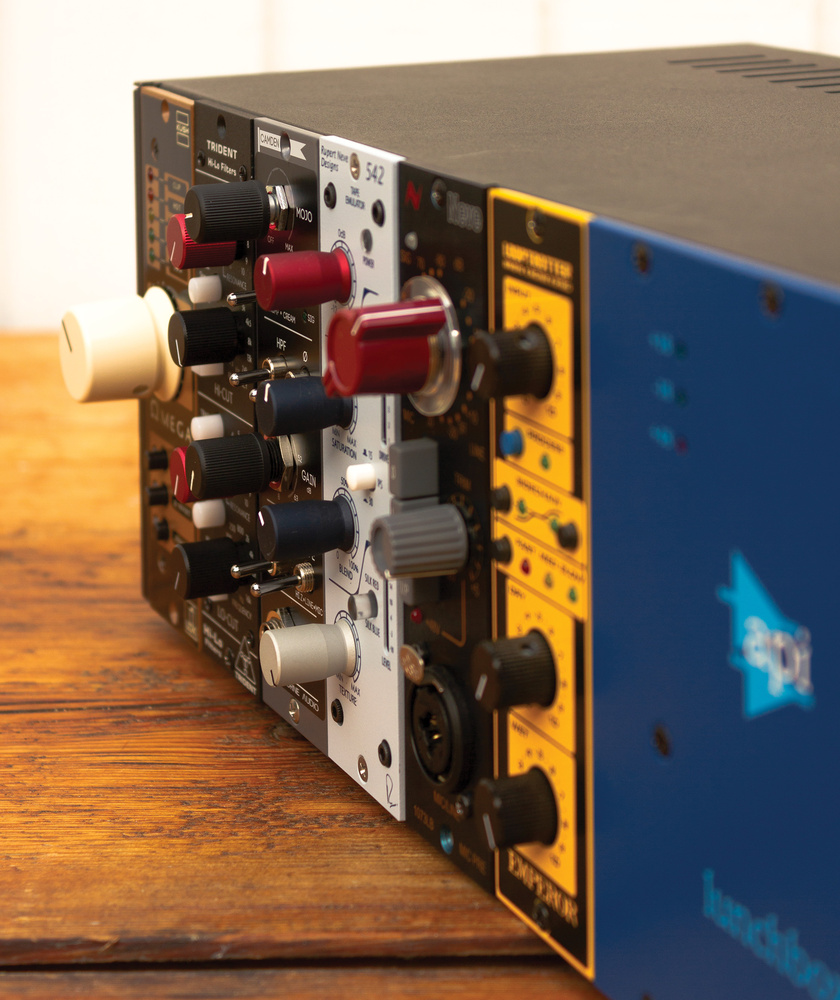
Modules from different manufacturers in one rack -- the whole point of 500 series. Mix a preamp from one brand with an EQ from another and a compressor from a third. Source: Sound On Sound
500 Series vs. Rack Mount: An Honest Comparison
This comes up constantly. Here's the real breakdown.
| 500 Series | Rack Mount | |
|---|---|---|
| Cost per channel | Lower. Module ~$300-700 + share of chassis cost | Higher. Full unit $800-3000+ per channel |
| Flexibility | Swap modules anytime, mix brands | Fixed configuration |
| Rack space | 8 modules in 3U | Each unit is 1-2U |
| Power supply | Shared (chassis quality matters) | Dedicated per unit |
| Sound quality | Comparable, with some caveats | Sometimes slightly better due to dedicated PSU and larger components |
| Resale | Modules hold value well, easy to sell individually | Harder to sell expensive single units |
| Portability | A 3-slot chassis fits in a backpack | Not portable |
The sound quality question deserves more nuance. Some engineers will tell you that a full-size rack unit always sounds better than its 500 series equivalent because it has a dedicated power supply and more physical space for components. There's some truth to that -- a larger transformer or a beefier output stage can make a difference. But modern 500 series designs have gotten very close. For most applications, in a mix, you'd struggle to tell the difference in a blind test.
Where rack mount still wins: mastering, where every fraction of a dB matters, and high-headroom applications where you really need the extra voltage swing that a larger power supply provides.
Where 500 series wins: everything else, especially if you value flexibility and don't want to spend $10K before you have a signal chain you're happy with.
How Much Does a 500 Series Setup Actually Cost?
Real numbers. No hand-waving.
Starter setup (1 preamp + chassis):
- 3-slot chassis: ~$199
- One preamp module: ~$300-600
- XLR cables: ~$30-50
- Total: ~$530-850
Working setup (preamp + EQ + compressor):
- 8-slot chassis: ~$400
- Preamp: ~$400-600
- EQ: ~$400-600
- Compressor: ~$400-600
- Cables: ~$60-100
- Total: ~$1,660-2,300
Comparable rack mount signal chain:
- Standalone preamp: ~$1,000-2,500
- Standalone EQ: ~$1,000-2,500
- Standalone compressor: ~$1,000-2,500
- Total: ~$3,000-7,500
The 500 series path gets you a three-piece analog signal chain for roughly half what the equivalent rack units would cost. And you get the chassis, which has empty slots ready for future modules. That's the real value proposition -- you're not just saving money today, you're buying into a system that grows with you.
Setting Up Your First 500 Series Rack
If you've never done this before, it's simpler than it looks.
Step 1: Power off the chassis. Always install modules with the power off. The card edge connector carries power rails, and hot-swapping can damage components.
Step 2: Slide the module in. Line up the card edge connector on the bottom of the module with the slot in the chassis. Push firmly until it seats. You'll feel it click. Most modules also screw into the top and bottom of the chassis faceplate for stability.
Step 3: Connect the I/O. On the back of the chassis, each slot has its own input and output jack (XLR or TRS, depending on the chassis). Connect your mic or line source to the input. Connect the output to your audio interface's line input.

The back of the Z&H VC500PVR, an 8-slot 500 series power rack with balanced I/O on every slot.
Step 4: Power on and check levels. Turn on the chassis, set your module's gain to minimum, then bring it up while watching your DAW's input meter. Target peaks around -18 to -12 dBFS for healthy recording levels.
If you're chaining multiple modules -- say, preamp into EQ into compressor -- you route them externally with short patch cables between the chassis I/O jacks. Slot 1 output goes to Slot 2 input, Slot 2 output goes to Slot 3 input, and so on. Some chassis have internal linking features that let adjacent slots chain without external cables.
Signal Chain Examples
Here are a few combinations that work well. These aren't theoretical -- we've tested these in our shop.
Vocal recording chain: V12 preamp (transformer warmth, forward presence) -> V250 parametric EQ (gentle high shelf for air, notch out any room resonance) -> a 500 series compressor of your choice (2-3 dB of smooth leveling). Three slots. Done. The vocal sits in the mix without a fight.
Drum recording (overhead pair): Two V12 preamps (one per channel, transformer saturation adds weight to cymbals and room sound) -> link for stereo. If you want more control, add two channels of compression after.
Guitar/bass DI chain: Preamp with transformer coupling for harmonic content -> V560 graphic EQ for quick tone shaping -> out to converter.
Is 500 Series Worth It?
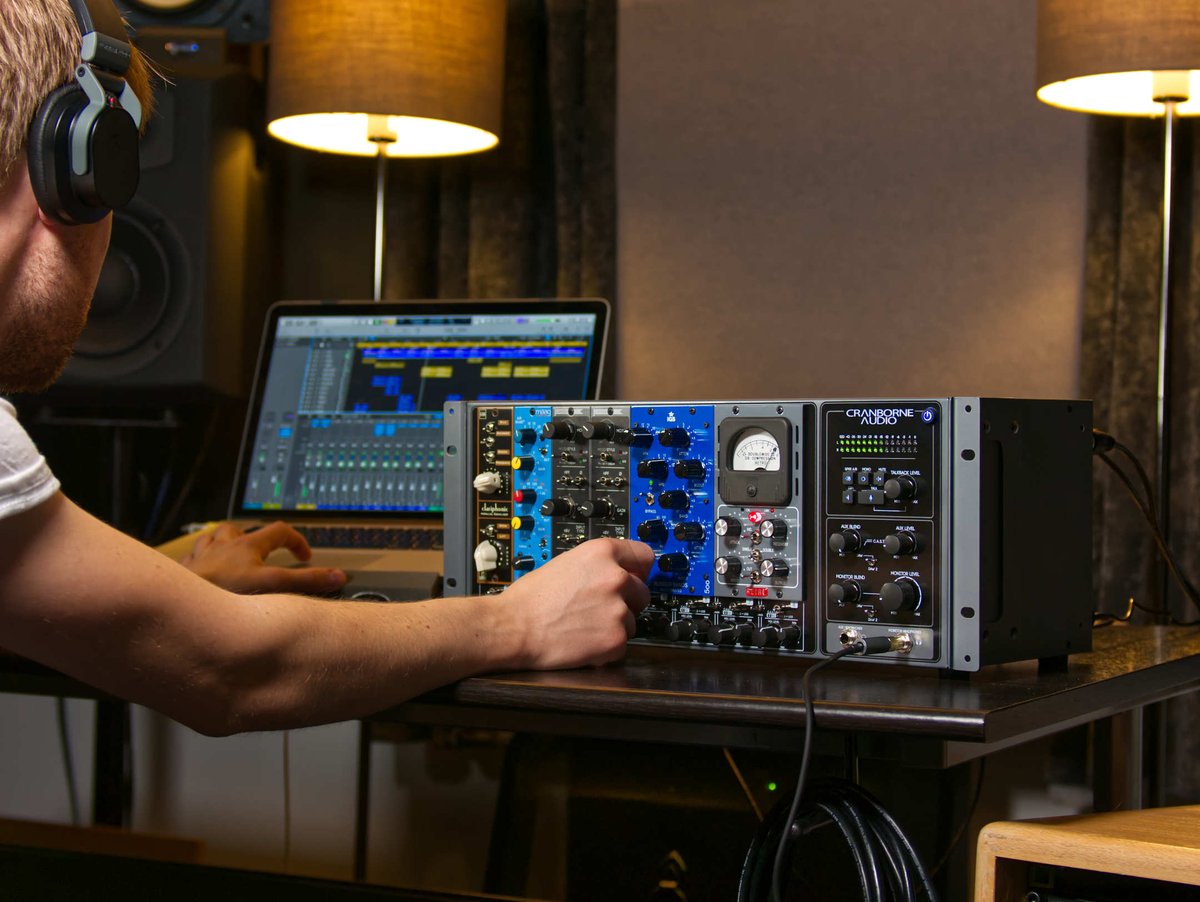
500 series gear in a realistic home studio environment -- compact, accessible, and sitting right next to your interface and monitors. Source: Cranborne Audio
Depends on where you are.
If you're recording into an audio interface and you've never used outboard gear, a single good preamp module in a small chassis will make a bigger difference to your recordings than any plugin you can buy. It's the most cost-effective way to step into analog hardware.
If you're already working with rack gear and you're happy with your sound, 500 series doesn't automatically make things better. It's a different way of buying the same types of circuits. The advantage is flexibility and expandability, not inherently superior sound.
If you're running a commercial studio and need reliability, 500 series has a practical advantage: if a module fails, you swap it out and keep working. With a rack unit, the whole thing goes to the bench.
And if you're the kind of person who likes trying different flavors -- a different preamp for vocals vs. drums, a fast compressor for some tracks and a slow one for others -- the 500 series format was basically designed for you.
Common Mistakes Beginners Make
Buying a cheap chassis to save money. The chassis is your power supply. A noisy power supply undermines every module in it. Spend the money here.
Buying too many modules at once. Start with one or two. Learn what they do to your recordings. Then expand based on what you actually need, not what looks cool on a forum.
Ignoring gain staging. 500 series modules have real analog gain stages. You can clip them. You can under-drive them. Learn where the sweet spot is for each module. We wrote a whole gain staging guide if you want to dig into this.
Assuming all modules from the same brand are a "set." One of the best things about 500 series is mixing manufacturers. Don't limit yourself. A preamp from one company, an EQ from another, a compressor from a third. That's the whole point.
The Takeaway
The 500 series format is the most practical way to build an analog signal chain in 2026. You start small, you spend less per piece, and you end up with a setup that's tailored exactly to how you work. There's no waste. No paying for features you don't need. No committing to one manufacturer's idea of what a channel strip should be.
Get a decent chassis with a clean power supply. Pick one module that addresses your biggest need -- usually a preamp. Record with it. Hear what it does. Then decide what comes next.
Frequently Asked Questions
What does "500 series" mean in audio?
It's a standardized modular format for analog audio gear, originally designed by API in the late 1960s. Modules are small, single-width cards that slide into a powered chassis. The format was opened up through the VPR Alliance in 2006, so now dozens of manufacturers make compatible modules.
Are all 500 series modules compatible with all chassis?
If both the module and chassis follow the VPR Alliance specification, yes. That covers the vast majority of modern 500 series gear. Some very old or non-standard modules may not fit every chassis, but this is rare. Check that your chassis provides enough current per slot for power-hungry modules.
Is 500 series as good as full-size rack gear?
For tracking and mixing, the difference is minimal with well-designed modules. Some mastering engineers prefer rack units for the slightly higher headroom that a dedicated power supply provides. But in a blind test, most people can't tell the difference in a full mix context.
What is a 500 series lunchbox?
"Lunchbox" is just the informal name for a small 500 series chassis, usually 2 to 6 slots. The name stuck because early portable chassis were roughly the size and shape of a lunchbox. Functionally, it's the same thing as a larger power rack -- it holds modules and provides power.

The Z&H VC500VPR, a compact 3-slot 500 series rack with Neutrik gold-plated connectors and channel linking for stereo processing.
How many slots do I need?
For a single-channel recording setup (preamp + one or two processors), 3 slots is enough. If you want stereo processing or a larger collection of modules, 6 to 8 slots gives you room to grow without buying a second chassis.
Can I use 500 series for live sound?
Yes. The compact format actually makes it ideal for portable rigs. A 3-slot chassis with a preamp and compressor fits in a bag. Some FOH engineers use 500 series modules for vocal chains or key instrument processing on the road.
What's the VPR Alliance?
The VPR (Vertical Plug-in Rack) Alliance is an open standard created by API that defines the electrical and mechanical specifications for 500 series compatibility. It ensures modules from different manufacturers work in any compliant chassis. The standard covers power rail voltages, connector pinout, module dimensions, and minimum current requirements.
Z&H Designs builds 500 series modules and chassis for studios that want analog character without the bulk. The V12 preamp, V560 graphic EQ, and V250 parametric EQ are all hand-built with discrete circuitry and custom transformers. Power them with the VC500VPR 8-Slot or VC500VPR 3-Slot chassis. See everything at zhdesigns.audio.
If you already understand the format and are deciding what kind of hardware workflow suits your room, read 500 Series vs Rackmount Gear. If you want to browse actual modular options, explore the Z&H 500 Series collection.
Sources
API Audio, "The History of API and the 500 Series" -- apiaudio.com
Sound On Sound, "Choosing 500-Series Modules" -- soundonsound.com
VPR Alliance, "500 Series Specification" -- apiaudio.com/vpr-alliance
Sweetwater, "Getting Started with 500 Series" -- sweetwater.com
Gearspace Forum, "500 Series: Is It Worth the Investment?" -- gearspace.com
MusicRadar, "500 Series Buying Guide" -- musicradar.com
Image Copyright Notice: All images used in this article are utilized under Fair Use provisions for educational and technical review purposes. Original copyrights remain with their respective owners. If copyright infringement occurs, please contact us for removal.


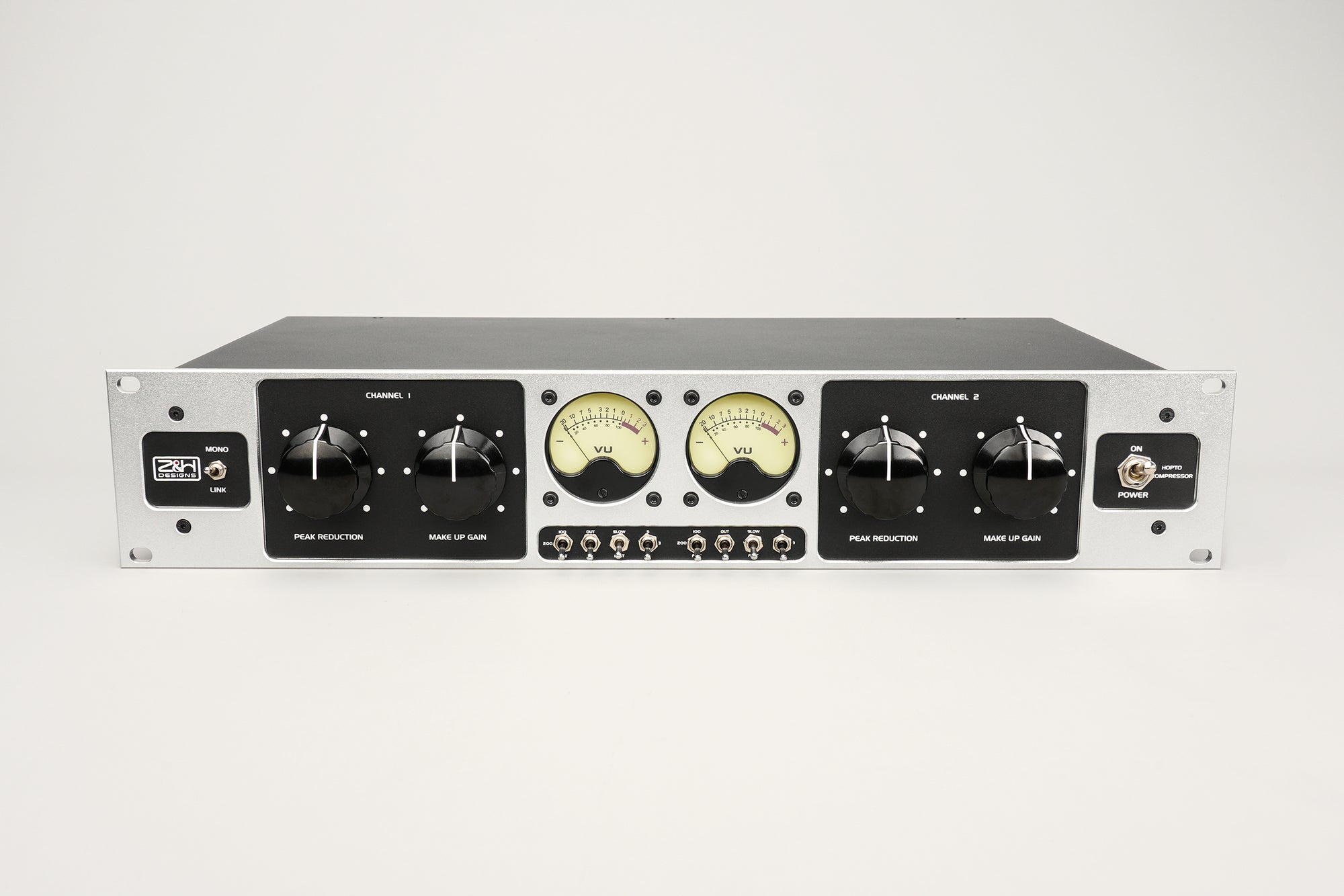
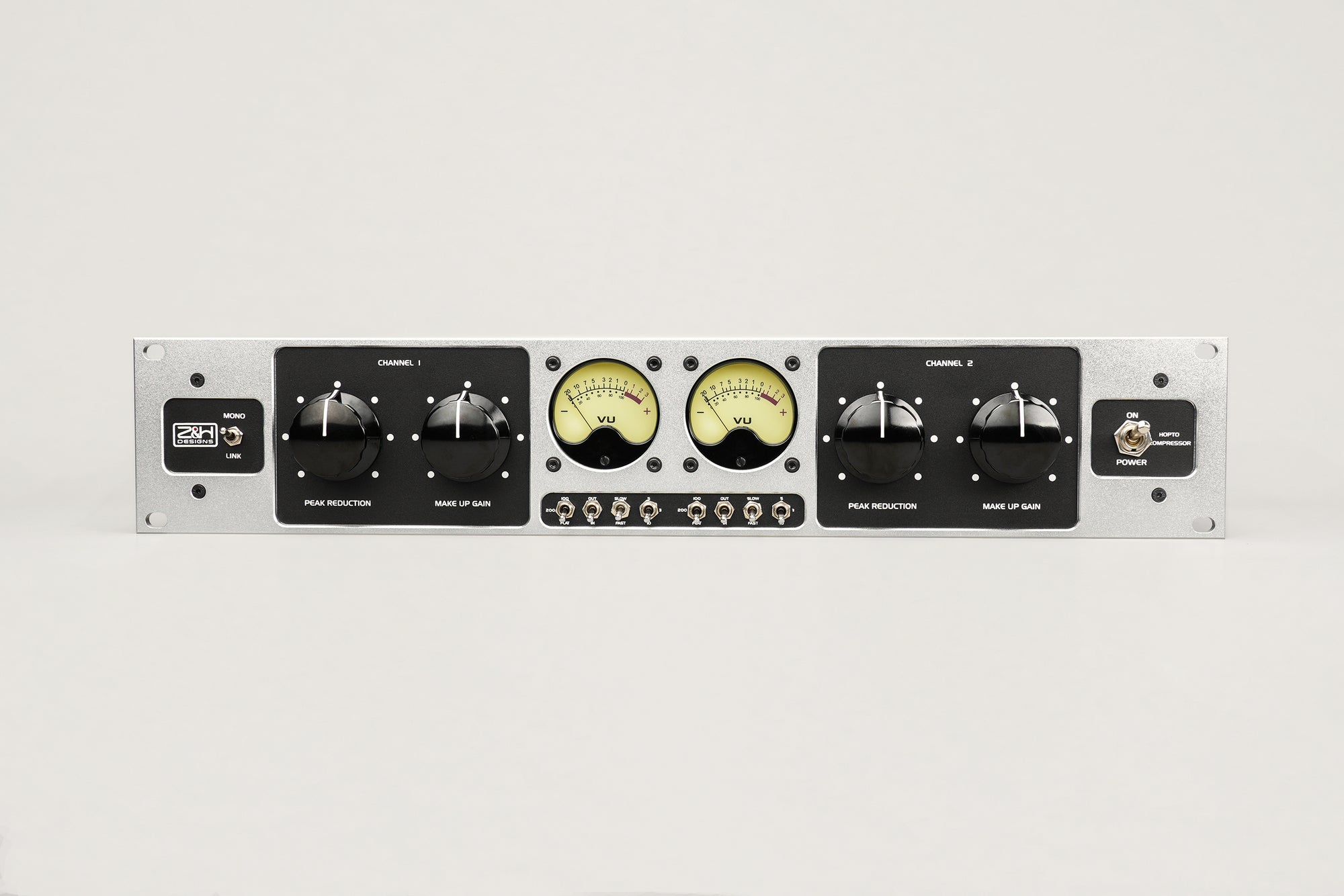


.jpg)