

A sidechain is the detection circuit inside a compressor that decides when gain reduction happens and how much to apply. It runs parallel to the audio path but stays completely separate from it. Understanding how the sidechain works at the circuit level gives you better control over every compression result, from transparent bus glue to kick/bass ducking. This article covers what the sidechain actually does, then shows you how to put it to work on hardware compressors.
What a Sidechain Actually Does
Every compressor has two parallel signal paths. The audio path carries your signal through the gain reduction element, whether that's a FET, a photocell, a VCA, or a tube. That's the part you hear. The sidechain is the second path: it taps a copy of the signal, runs it through a level detector, and generates a control voltage that tells the gain element how much to turn down. Think of the audio path as the road and the sidechain as the traffic light controlling the flow.

A simplified view of the sidechain architecture. The input signal splits: one path goes through the variable-gain amplifier (VCA, FET, etc.), the other feeds the level detector that controls it. Public domain via Wikimedia Commons
The critical point is that these two paths are independent. You can change what the sidechain hears without touching the audio path at all, and that separation is where every useful sidechain technique comes from.
The detector itself can work in different ways. A peak-detecting sidechain responds to instantaneous peak voltage, catching transients fast, which is why FET compressors snap onto a drum hit immediately. An RMS-detecting sidechain measures average power over a short time window, producing a smoother, less transient-reactive response. Some VCA compressors let you switch between peak and RMS, which changes how the sidechain responds to the exact same signal. Peak gives tighter control for ducking and limiting, while RMS works better for bus compression and transparent leveling.

Compression transfer curves: hard knee vs soft knee. The sidechain detector determines when the signal crosses the threshold and how gain reduction ramps in. Public domain via Wikimedia Commons
Once the detector generates the control signal, the compressor's ratio and threshold settings determine how that signal translates into actual gain reduction. A higher ratio means more aggressive compression for a given amount of overshoot above the threshold. But regardless of ratio, the sidechain is always the first link in the chain: it decides when compression happens, and the ratio decides how much.

How attack and release shape the compressed signal. A peak-detecting sidechain catches the transient immediately (fast attack), while an RMS detector responds to average level over time. Public domain via Wikimedia Commons
Internal and External Sidechain: Two Ways to Control the Detector
With the basics covered, the next question is what signal the sidechain actually listens to. There are two modes, and the difference between them opens up everything that follows.
Internal Sidechain
When you patch a compressor on a channel without touching any sidechain settings, the detector listens to the same signal being compressed. Signal comes in, gets split, one copy goes through the gain element, the other goes to the detector. This isn't a feature you turn on. It's just how compressors work. Every compressor you've ever used has an internal sidechain running, whether the front panel mentions it or not.
Even so, the internal sidechain has more depth than it appears. The detector has its own frequency response and time characteristics: some average the signal over time (RMS), some respond to instantaneous peaks, some are naturally more sensitive to midrange than to bass. All of that shapes how the compressor reacts before the gain element ever sees a control signal. When people say a compressor has "character," a good chunk of that character lives in the detector circuit. This is also why consistent gain staging before the compressor matters: the sidechain detector responds differently depending on how hard you hit it, and inconsistent input levels mean unpredictable compression behavior.

VU meters: the visual reference for gain staging. The level you feed the sidechain detector directly affects how the compressor responds. CC BY 3.0 via Wikimedia Commons

Compression in action: original signal (top) vs compressed result (bottom). The internal sidechain detects peaks and applies gain reduction accordingly. CC BY-SA 4.0 via Wikimedia Commons
External Sidechain: The Key Input
Most hardware compressors also have an external sidechain input on the back panel, usually labeled "Key Input," "Ext SC," or "Sidechain In." Connecting a signal to this jack tells the detector to stop listening to the main audio and respond to whatever you feed it instead. The audio path stays exactly the same: your mix bus, vocal, or drum group still passes through the compressor normally. Only the detection source changes.
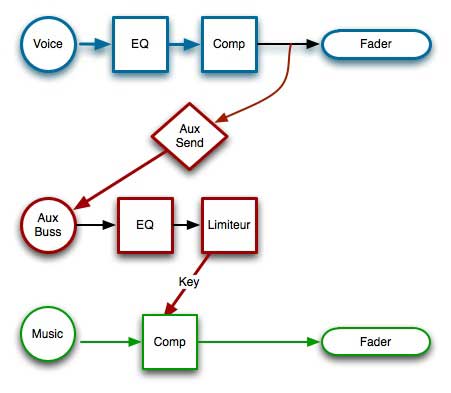
External sidechain routing. The key input lets you feed a completely different signal into the detector, so the compressor reacts to one source while processing another. CC BY-SA 3.0 via Wikimedia Commons
This is what makes ducking work. Feed a kick drum into the key input of a compressor on the bass channel, and every kick hit causes the detector to see a peak, the compressor clamps down, and the bass dips out of the way. When the kick releases, the bass comes back. The bass signal itself never changed in level; the compressor just thinks it did because it's listening to the kick.

A mic'd kick drum at 1093 Studios. In a sidechain ducking setup, you'd route this kick signal to the key input of the compressor on your bass channel. CC BY 2.0, John Tuggle via Wikimedia Commons
On hardware, routing is physical and immediate. Run a cable from an aux send or direct out into the key input on the back of the unit, or patch into the compressor's sidechain insert on a console patchbay. Thirty seconds with a patch cable and you hear the result with zero latency.

Rear panel of the Z&H 1178 Stereo Peak Limiter. Even without an external key input, the continuously variable sidechain HPF on the front panel lets you shape what the detector hears for frequency-conscious compression.
Sidechain Filters and EQ: Shaping What the Detector Hears
You don't always need a different signal in the sidechain. Sometimes you just need the detector to ignore certain frequencies in the signal it's already listening to. That's what sidechain filtering does, and the most common form is a high-pass filter.
When you compress a full mix, low-frequency content (kick, bass, sub synths) carries the most energy. Without a sidechain HPF, every kick hit pushes the compressor past the threshold and the entire mix ducks: vocals, guitars, everything breathes with the kick. You hear it as pumping. Sometimes that's the effect you want, but usually it isn't. Set a sidechain HPF at 60 to 150 Hz and the detector stops reacting to the low end, while the compressor still processes the full-frequency audio path. Bass-heavy material (hip hop, EDM, modern pop) might need the filter as high as 120 to 150 Hz; acoustic or jazz mixes can often get away with 60 Hz. Start low and bring the frequency up until the pumping stops. The result is smoother, more transparent bus compression.

Sidechain HPF control on the Z&H 1178. This filter only affects what the detector hears, not the audio path. Dialing it up prevents low-frequency energy from triggering unwanted gain reduction.
Some compressors go further with a full sidechain EQ: boost a narrow band and the compressor becomes hypersensitive to that frequency; cut a band and it ignores it. This is frequency-selective sidechain compression, and it's also the entire operating principle behind dedicated de-essers, which are simply compressors with a sidechain EQ pre-tuned to the sibilance range around 4 to 8 kHz. You can replicate this on any compressor with a sidechain insert by patching in an external EQ, boosting a narrow band at the problem frequency, and sending that filtered signal to the detector. The compressor only clamps down when that frequency spikes; the rest of the time, it barely touches the signal.
Sidechain Compression on Z&H Compressors
All three of our compressors have built-in sidechain features, each designed for a different context. Here's how we set them up in the studio.
1178 Stereo Peak Limiter
Drum room mics are one of the hardest sources to compress well. The low end from the kick wants to eat all the gain reduction, leaving the snare and cymbals flat and lifeless. On the 1178, the continuously variable sidechain HPF lets you dial in exactly where the detector stops reacting to the kick. Set it around 100 to 120 Hz and the compressor responds to the snare and cymbals instead, keeping the room mic alive even at 10+ dB of gain reduction. The FET topology's feedback sidechain self-corrects for overshoot, so you can slam it hard without things getting brittle.
The 1178 doesn't expose an external key input, so all sidechain shaping happens through the variable HPF and the internal peak detector itself. What it does offer inside a single unit is the built-in mix knob for parallel compression: slam the compressed signal at 8 to 10 dB of gain reduction, then dial back the wet amount until the uncompressed transients come back through. No aux buses, no summing, no extra patching. Pair that with the stereo / dual-mono / M/S mode switch and you can compress Mid and Side components independently on a mix bus, which is where a lot of 1178 mastering work lives.

The Z&H 1178 Stereo Peak Limiter. Variable sidechain HPF, mix knob for parallel compression, and stereo / dual-mono / M/S mode switching.
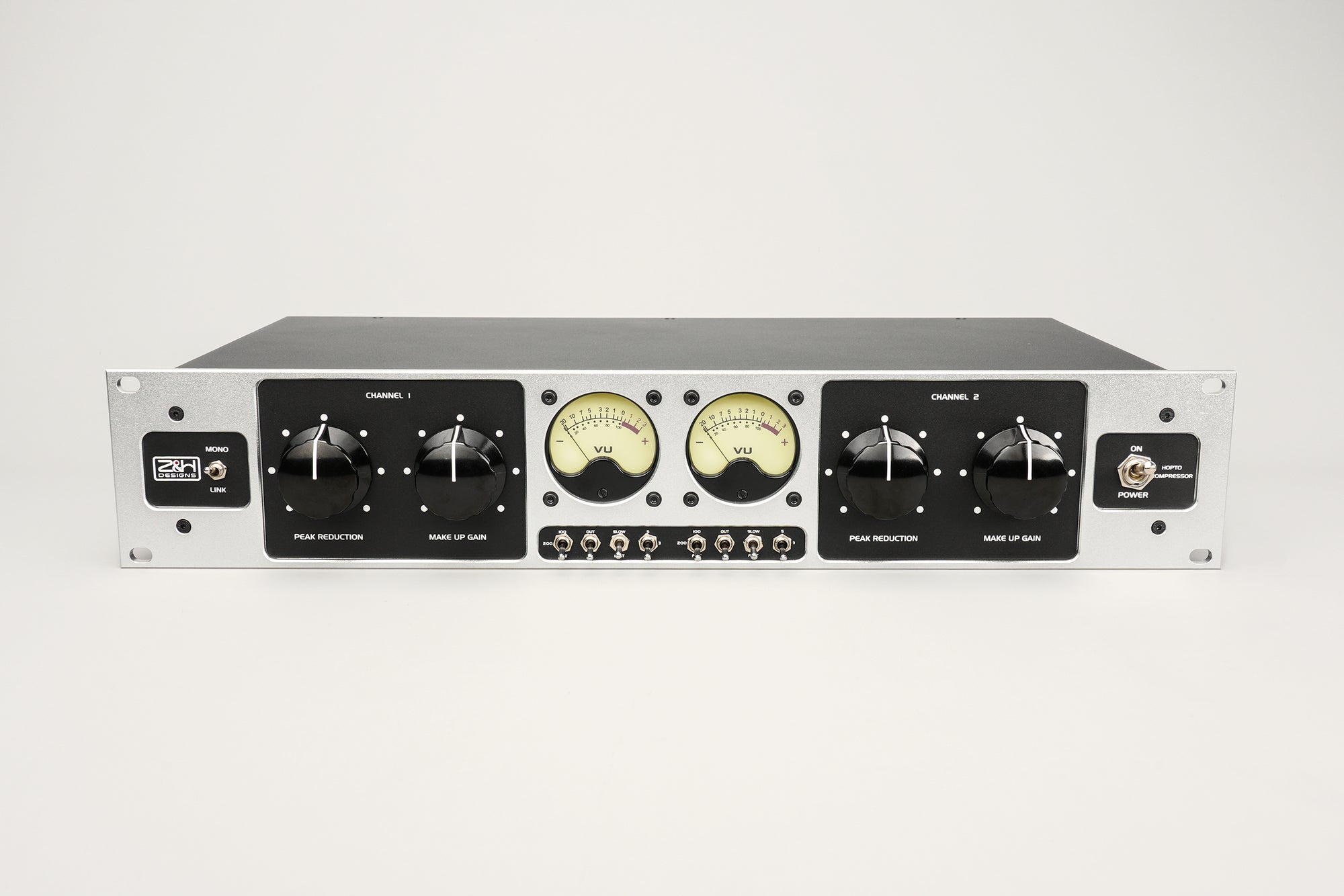
Hopto Stereo Optical Compressor
Vocals, acoustic guitars, and piano are some of the most dynamic sources you'll compress, and heavy-handed sidechain detection can make compression obvious in all the wrong ways. The Hopto's optical topology solves this by design: the VTL5C2 photocell makes the sidechain inherently programme-dependent, so the response adapts to the dynamics of the performance rather than applying a fixed behavior. Loud phrases get compressed smoothly, quiet phrases barely get touched, and the release follows the material automatically.
On a vocal channel, setting the sidechain HPF to 100 Hz keeps chest resonance and proximity effect from driving the compression, so the detector responds to midrange and presence frequencies instead. At 3:1, the Hopto handles level control without squashing the performance. Consistent gain staging before the Hopto makes the optical sidechain respond more predictably, since photocell behavior shifts with the input level you feed it.
For instrument buses (strings, keys, synth pads), the 200 Hz HPF position lets the compressor ignore the low-mid body and respond mostly to upper frequencies, controlling dynamics without thinning the low end. And because the Hopto can run as two independent mono compressors with the link switch off, you can use one channel on a vocal and the other on a guitar bus in the same session.

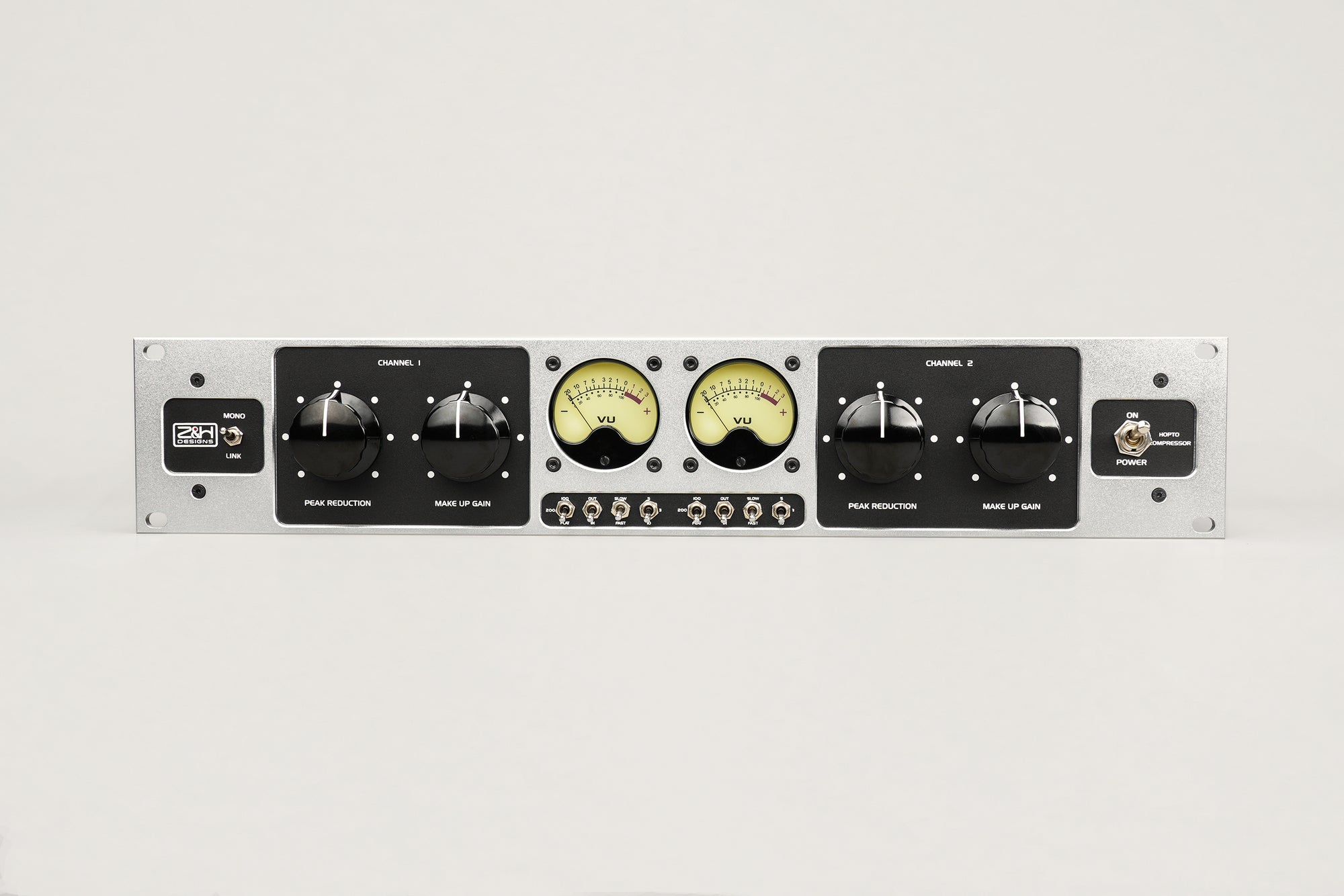
The Z&H Hopto Stereo Optical Compressor. VTL5C2 optocoupler, sidechain HPF at 100 Hz / 200 Hz, three ratio settings, and stereo or dual-mono operation.

A vactrol optocoupler (Perkin Elmer VTL5C2), the type of component at the heart of optical compressor sidechains. The photocell's physical memory gives optical compressors their programme-dependent character.
VCA Compressor
Mix bus compression is where sidechain control matters most, because any misstep affects every element in the mix at once. The Z&H VCA Compressor is built for exactly this: a continuously variable sidechain HPF, an external key input, and a feedforward/feedback topology switch that reroutes where the sidechain taps the signal.
On the mix bus, start with the sidechain HPF around 80 Hz, feedback mode, 4:1, slow attack (around 30 ms), auto release, and 2 to 3 dB of gain reduction on peaks. The HPF keeps the kick from driving all the compression, and feedback mode gives that smooth, self-correcting "glue." If the mix needs tighter, more controlled compression (dense pop, loud rock), flip to feedforward mode with the same settings for a noticeably different feel. That single switch can change the character of bus compression more than adjusting the ratio. We cover the technical difference between these two architectures in our feedforward vs feedback topology article.


The Z&H VCA Compressor. Variable sidechain HPF, feedforward/feedback topology switch, external key input, and THAT 2181 VCA for precise sidechain-controlled compression.
The variable sidechain HPF gives you direct control over what the detector responds to, which matters more on a mixbus than almost anywhere else. Move the filter up through the sub region and the kick fundamental stops driving gain reduction, while the compressor still reacts to snare transients and upper midrange. On a drum bus, the same filter decides whether the kick's body or just its attack shapes the dynamics of the whole kit.

Classic dbx VCA compressors. The dbx 160 (1976) was the first successful feedforward sidechain compressor, made possible by David Blackmer's decilinear VCA. Modern VCA compressors like the Z&H VCA Compressor descend from this same lineage. CC BY 2.0 via Wikimedia Commons
Sidechain Techniques: Quick Reference
| Technique | Sidechain Source | What It Does | Typical Settings |
|---|---|---|---|
| Kick/Bass Ducking | Kick drum (ext key in) | Bass ducks on kick hits | Fast attack, med release, 2-4 dB GR |
| Mix Bus HPF | Internal + HPF at 60-150 Hz | Prevents bass-driven pumping | Adjust HPF freq until pumping stops |
| De-Essing | Internal + SC EQ boost 4-8 kHz | Compresses sibilance only | Fast attack/release, 3-6 dB GR on peaks |
| Vocal Clarity | Lead vocal (ext key in) | Instruments dip under vocal | Fast attack/release, 2:1, 1-2 dB GR |
| Reverb/Delay Ducking | Dry signal (ext key in) | Effects duck behind source | Fast attack, ~150 ms release, 3:1-6:1 |

Larry Crane mixing on a Rupert Neve Designs 5088 at Jackpot! Recording Studio, Portland. In a hardware mixing environment, sidechain routing is as simple as running a patch cable from one point to another. CC BY-SA 2.0 via Wikimedia Commons
The Takeaway
The sidechain is the decision-maker inside every compressor. It determines when compression happens, how fast it responds, and what frequencies trigger it. Once you understand that the sidechain and the audio path are separate, every technique in this article becomes intuitive: internal sidechain for standard compression, external key input for ducking, HPF filtering to prevent bass-driven pumping, and sidechain EQ for frequency-selective control like de-essing.
The compressor topology, whether it's FET, optical, VCA, or tube, determines the sidechain's character. FET sidechains are fast and punchy. Optical sidechains are programme-dependent and smooth. VCA sidechains are the most precise and controllable. Same technique, different topology, different result.
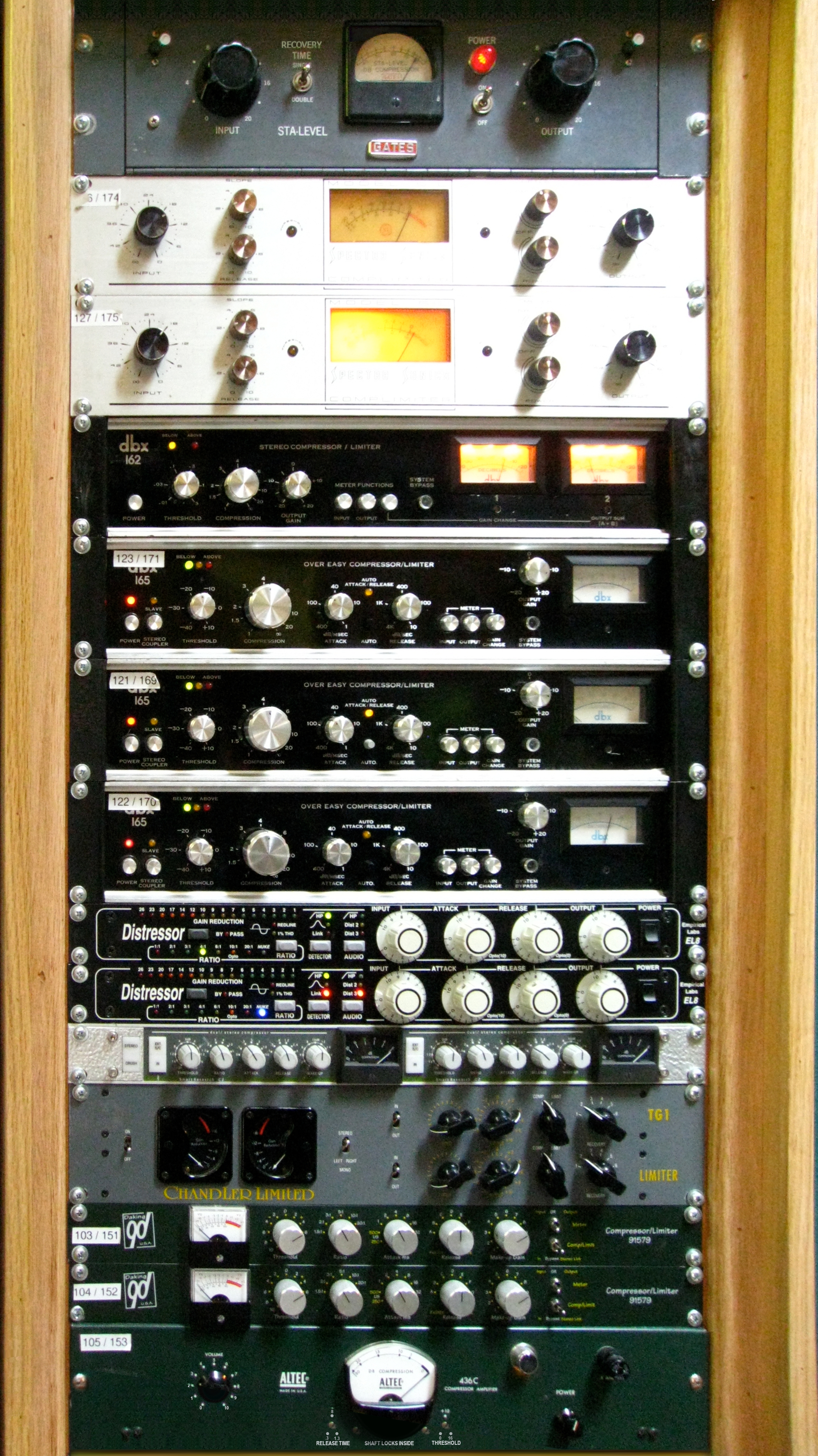
A dedicated compressor rack at Supernatural studio. Different compressors, different sidechain behaviors, different applications.
Frequently Asked Questions
What is a sidechain in audio compression?
A sidechain is the detection circuit inside a compressor that monitors signal level and tells the gain reduction element when and how much to compress. It runs parallel to the audio path but is completely separate from it. Every compressor has one, whether the front panel exposes sidechain controls or not.
What's the difference between internal and external sidechain?
Internal means the detector listens to the same signal being compressed. External means you feed a different signal into the detector through a key input. The audio path stays the same either way; only the detection source changes.
What does a sidechain high-pass filter do?
It prevents low-frequency content from triggering the compressor. On a mix bus, this stops kick and bass from making the whole mix pump. The HPF only affects what the detector reacts to, not the audio path itself. Skipping this on a bus compressor is the single most common bus compression mistake.
Can I use sidechain compression on vocals?
Yes, in several ways. Sidechain EQ for de-essing is the most common: boost sibilant frequencies in the sidechain so the compressor targets them. You can also use an external sidechain to duck a reverb or delay return whenever the dry vocal is present, keeping effects from smearing over articulation. Consistent gain staging before the compressor makes sidechain detection more reliable.
Does sidechain compression sound different on different compressor types?
Noticeably. FET compressors have fast, punchy sidechains because the transistor switches quickly. Optical compressors have programme-dependent behavior baked into the photocell physics. VCA compressors offer the most transparent and controllable response thanks to the Blackmer gain cell architecture. Same technique, different topology, different result.
How do I set up external sidechain on hardware?
Run a cable from an aux send or direct out into the compressor's key input (usually on the back panel). The compressor's detector will now respond to whatever signal you feed it. For ducking, send the trigger source (kick drum, lead vocal) to the key input. For frequency-selective compression, patch an EQ into the sidechain insert and boost the target frequency range.
What's the difference between sidechain compression and parallel compression?
Different things entirely. Sidechain compression changes what the detector listens to. Parallel compression blends a heavily compressed signal with the dry original. You can use both at the same time: run a sidechain-filtered FET compressor in parallel using the built-in mix knob on something like the Z&H 1178.
Sources
Sound On Sound, "Sidechain Techniques" -- soundonsound.com
Wikipedia, "Blackmer Gain Cell" -- en.wikipedia.org
THAT Corporation, "THAT 2181 Series Datasheet" -- thatcorp.com (PDF)
My New Microphone, "The Complete Guide to Sidechain Compression" -- mynewmicrophone.com
Sweetwater, "What is Sidechain Compression?" -- sweetwater.com
VTL5C2 Optocoupler Datasheet -- Farnell (PDF)
Image Copyright Notice: All images used in this article are utilized under Fair Use provisions for educational and technical review purposes. Original copyrights remain with their respective owners. If copyright infringement occurs, please contact us for removal.




.jpg)
.jpg)
.jpg)