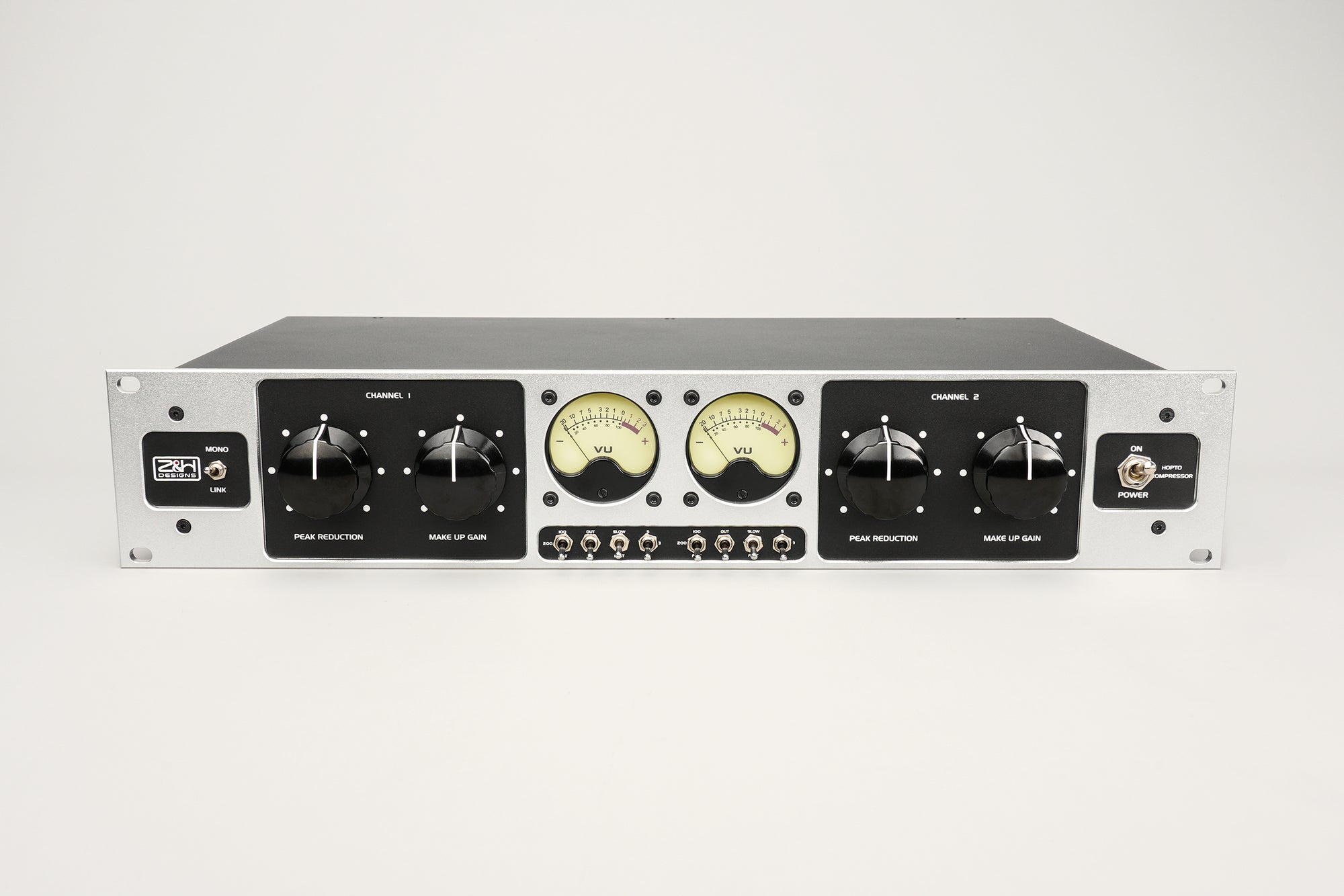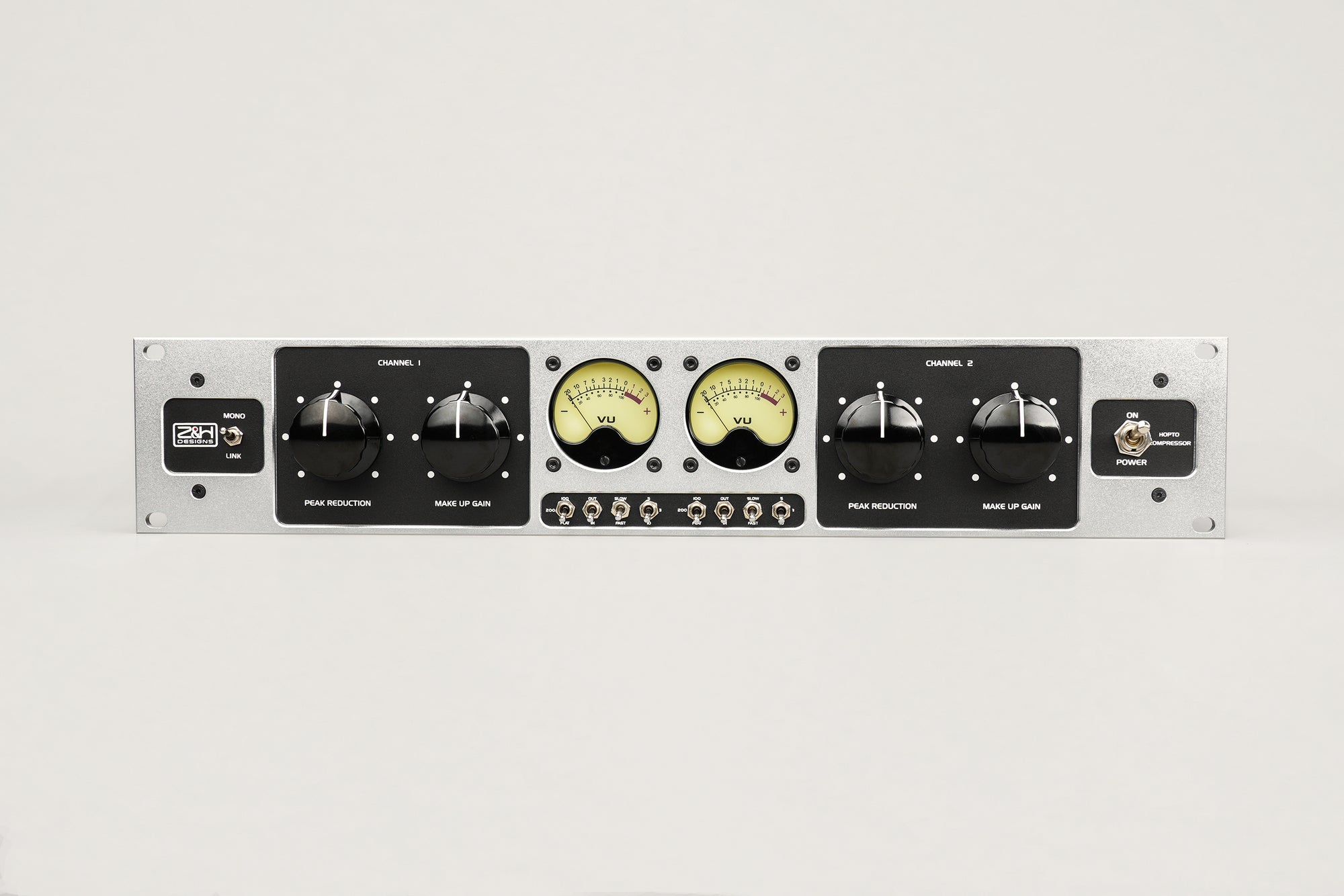

Some studios buy 500 Series because it looks like the cheaper entry point. Some buy rackmount because it feels like the more serious choice. Both instincts miss the point. The real difference is workflow. 500 Series makes sense when you want to build an analog chain one function at a time. Rackmount gear makes more sense when the job is already clearly stereo, mastering-focused, multi-channel, or dependent on a larger control layout and a complete self-contained unit. If you are deciding what to buy first, the useful question is not which format looks more "pro." It is which one removes the next bottleneck in your room.
If you are still new to the modular side, our 500 Series Explained guide covers the format itself. This article is the next step: how that format compares with traditional full-size studio rack gear when actual buying decisions start.

500 Series and rackmount gear often solve different studio problems. One is modular and slot-based. The other is usually purpose-built around a complete full-size unit.
500 Series vs Rackmount Gear: The Short Answer
500 Series is best when you want to build a signal chain gradually. A powered chassis gives you the frame and the power, then each module adds one function: a preamp, an EQ, a compressor, or something else later. That makes it attractive for smaller rooms, first hardware setups, and engineers who want flexibility without filling an entire rack immediately.
Rackmount gear is best when the job itself is already more complete. Stereo bus compression, mastering EQ, multi-channel recording front ends, and hardware that needs a larger control surface all benefit from a full-size format. Sometimes the difference is not even sonic at first. It is operational. The knobs are easier to grab. The routing is clearer. The whole unit was designed as one complete instrument, not as a module living inside a larger shared system.
The mistake is to read that as "500 Series is for small studios, rackmount is for big studios." That is not the real split. The real split is whether you are building a system or buying a self-contained tool.
The Real Difference: A System vs a Self-Contained Unit
500 Series is not just a smaller version of rackmount outboard. It is a different purchasing logic.
With full-size rackmount gear, you usually buy one box because you already know the job: a stereo EQ for mix bus work, an 8-channel front end for drums, a mastering compressor, and so on. The unit arrives as a complete object. Power supply, controls, routing, layout, and operating assumptions were designed together.
With 500 Series, you buy into a host system first, then decide which functions live inside it. The host is the chassis. The functions are the modules. That means the format changes more than footprint. It changes how you expand, how you budget, and how you think about the signal chain in the first place.
That is why people who love 500 Series often talk about "building a rack," not just "buying a preamp." They are not shopping for isolated boxes. They are assembling a modular working environment. That distinction sounds abstract until you need one more function and realize the whole format was designed for that exact moment.
What 500 Series Actually Changes
The biggest change is not the sound. It is the way you buy and build.
With 500 Series, you stop thinking in terms of "I need a whole rack unit for this job" and start thinking in terms of functions. Maybe you need one stronger front end than the interface preamps you already have. Fine. Add one preamp. Three months later you want to shape that tone on the way in. Add one EQ. Later again you want a compact vocal chain you can move between rooms. This is where the modular format starts paying for itself.
That is why 500 Series often works well for first hardware purchases. A chassis like the VC500VPR 3-Slot gives you enough room to start with one focused chain instead of committing to a full wall of gear. A common path is one mic preamp plus one EQ or one compressor, with one slot left open. That is a very different commitment level from buying multiple full-size units at once.
It also changes density. In a small room, eight modules in one chassis can make much more sense than stacking separate boxes everywhere. If you already know you want a larger modular setup, the VC500VPR 8-Slot is the kind of chassis that lets that expansion happen in an organized way rather than through random one-off purchases.

A 500 Series system separates the host chassis from the processing modules. That is the whole point: start small, add functions later, and grow the chain slot by slot.
Why the chassis matters more than beginners think
This is where shallow 500 Series articles usually stop. They say you need a chassis, then move on. But the chassis is not a furniture decision. It is a system decision.
In a 500 Series setup, the chassis is the shared host for power and I/O. That means its quality affects every module installed in it. A serious chassis is not only about slot count. It is about how cleanly it powers the modules, how much headroom it provides, how stable the whole rack feels when several modules are running, and whether the rack still makes sense after your second or third expansion step.
That is exactly why Z&H's VC500VPR line is framed around more than physical capacity. The VC500VPR 8-Slot is built around an 80W linear power supply, Neutrik gold-plated XLR connectivity, and reduced noise. The VC500VPR 3-Slot is the compact entry point for portable rigs, small rooms, and first 500 Series users. Those are not cosmetic differences. They reflect two different system intentions.
So when people ask whether 500 Series is "worth it," the hidden question is often whether they are willing to think in system terms. If the answer is yes, 500 Series opens up a very practical path. If the answer is no, full-size standalone hardware may simply be the easier purchase. Not better. Easier.
What Rackmount Gear Still Does Better
There are reasons full-size rackmount gear never went away.
First, front-panel real estate matters. A stereo compressor or mastering EQ often benefits from a larger layout because you are making small, deliberate moves and comparing channels constantly. When the workflow depends on quick reading, symmetry, or easy recall, the larger format helps. It is not glamorous, but it is real.
Second, some applications are simply more natural in rackmount form. A stereo bus processor, a mastering chain EQ, or an 8-channel microphone front end is not just "more of the same." Those tools are often designed around paired controls, bigger power reserves, more I/O, and a complete operating context. Z&H's Studio Rack Gear category exists for exactly that reason. Some jobs want a full-size dedicated box, not a slot-based building block.
Third, dedicated power supplies still matter. In 500 Series, the chassis is the shared host. That is efficient, but it means chassis quality is part of the system quality. In rackmount gear, each unit is usually designed as its own complete power-and-audio system. That does not automatically make every rackmount unit better. It does mean the designer had the freedom to optimize one enclosure around one job.
Stereo and mastering are not just bigger versions of single-channel work
This is where rackmount starts separating itself in a meaningful way.
On a single vocal chain, module-by-module building makes obvious sense. On a mastering EQ or stereo bus processor, the priorities change. You care more about left-right consistency, recall precision, reading two channels as one decision, and making small moves without second-guessing the layout. That is one reason Z&H's ME-250DX exists as a dedicated mastering-format EQ with stepped controls, 0.5 dB increments, and accurate recall orientation instead of trying to force that exact workflow into a more compact modular logic.
The HVC250 makes the same point from the mix/mastering side. It is not just an EQ with more knobs. It is built around stereo decisions, precise frequency work, and an operating context where the engineer may need to switch between overall left-right shaping and finer adjustments. That kind of task rewards panel space and a full-size control surface.
The same applies at the multi-channel end. An HO8 is not merely eight channels of preamp gain squeezed into one purchase. It is a front-end solution for drums, orchestra, and multi-mic sessions, with a 56V linear supply, high gain, and a workflow that assumes many sources are being managed together. That is not the same decision as assembling a 500 Series rack one slot at a time. One is channel-by-channel expansion. The other is a complete session front end.
Cost, Space, and Expansion: Where the Real Tradeoffs Are
People often reduce this comparison to price. That is too shallow to be useful.
500 Series usually lowers the cost of getting started, especially if you only need one or two pieces of analog processing right now. You buy the chassis once, then grow into it. That is a practical path for engineers who know they want analog hardware but do not yet know exactly what the whole rack will become.
Rackmount gear can be more expensive per purchase, but that does not always mean worse value. If you already know you need a stereo compressor for mix bus work, a mastering EQ with precise recall, or a multi-channel front end, then buying the right full-size unit once may be the cleaner move. Otherwise you risk building toward a modular system only to discover the real task wanted a different format from the start.
| Buying factor | 500 Series | Rackmount gear |
|---|---|---|
| Best starting point | One or two functions, built gradually | One complete dedicated job |
| Space efficiency | Very strong | Usually larger footprint |
| Expansion path | Add modules one slot at a time | Add separate units one by one |
| Stereo / mastering ergonomics | Depends on module design | Usually more natural |
| Portability | Strong, especially small chassis | Varies, often less convenient |
| System dependence | Chassis quality matters to all modules | Each unit stands alone |
That last point is important. In 500 Series, the chassis is not an accessory. It is part of the sound and stability equation. That is why a clean, well-powered rack matters so much. The whole point of a chassis like the VC500VPR line is to give modules a stable, low-noise host rather than treating the enclosure as an afterthought.
Buy by Task, Not by Myth
The best way to choose is to ignore category mythology and define the next task clearly.
If the task is "I want one better front end than my interface, and I may add one or two more analog functions later," 500 Series makes a lot of sense.
If the task is "I need a stereo bus compressor I can actually read and recall without annoyance," rackmount starts making more sense.
If the task is "I need an 8-channel recording front end for drums or ensemble sessions," that is usually not a modular-first problem.
If the task is "I want a compact chain I can take between rooms," 500 Series is back in front again.
That is why this comparison is really a workflow map in disguise. The wrong way to read it is "which format is better?" The right way is "which task am I trying to make easier?"
Four Common Buying Paths
This is where the comparison becomes practical.
1. "I want my first real vocal chain"
This is usually a strong case for 500 Series. You may only need one preamp and one processor to hear a meaningful jump over interface-only recording. A VC500VPR 3-Slot with a V12 and one EQ or compressor is a coherent first step because it improves the front end without forcing you to design a full rack on day one.
2. "I need a compact rig I can move between rooms"
Again, 500 Series usually wins. Portability is not just about weight. It is about keeping a small but useful chain together as one powered system. A chassis plus a few chosen modules is easier to transport and rebuild than several unrelated full-size units.
3. "I need a stereo bus processor I can trust"
This is where rackmount often becomes the better move. Stereo work is where panel layout, channel readability, and recall confidence start carrying more weight. If the job is already mix bus compression or stereo EQ, buying a dedicated full-size processor is often cleaner than trying to arrive there indirectly.
4. "I need an 8-channel recording front end for drums or ensemble sessions"
This is usually a rackmount decision. A unit like the HO8 is built around the reality of multi-mic tracking, shared session flow, and many sources being managed at once. That is a very different purchase from gradually building a modular rack.
Who Should Start with 500 Series
You should usually start with 500 Series if your real goal is to build a flexible chain, not to buy a trophy box.
A home or project studio that wants one better front end is a classic case. So is someone who wants to add analog color to tracking without redesigning the whole room. A portable rig is another good example. One compact chassis plus a few carefully chosen modules can cover a surprising amount of daily work.
It is also a good format for people who like to refine their setup over time. Start with a preamp such as the V12 if you want a forward, transformer-coupled front end. Add a V250 if you want more exact tone shaping, or a V560 if you prefer a faster, more visual EQ workflow. That kind of step-by-step system building is where 500 Series feels natural.
If your studio tends to ask, "What is the next useful function?" rather than "Which full-size flagship should I buy?" then you are probably thinking in a 500 Series way already.
Who Should Skip Straight to Rackmount Gear
You should probably go straight to rackmount gear if the job is already clearly stereo, mastering-oriented, or multi-channel.
If you are shopping for a mix bus compressor, a mastering EQ, or an 8-channel front end, there is a good chance the full-size format is simply the more direct answer. The larger control surface, broader I/O expectations, and dedicated whole-unit design tend to fit those jobs better.
The same applies if you dislike modular planning. Some engineers do not want to think about chassis capacity, current draw, or future slot allocation. They want one unit, one purpose, one place in the rack. That is a valid preference. A hardware workflow should reduce friction, not add a new kind of admin.
And there is one more honest reason: some people simply work better when every major processor feels like its own instrument. Rackmount gear has always been strong there.
A Practical Z&H Example: Building Small vs Building Wide
Imagine two studios.
The first one records vocals, guitars, and overdubs in a small room. The owner wants one analog chain that is clearly better than the interface alone, but there is not much space and not much reason to buy three full-size units immediately. That studio is a natural fit for 500 Series. A 3-slot chassis, one preamp, one EQ or compressor, and one open slot is a sensible start.
The second one is already mixing through hardware, wants stereo processing, and may add mastering-adjacent tools next. That room does not mainly need compactness. It needs full operating context, easier stereo handling, and probably more front-panel control at once. That is where studio rack gear becomes the cleaner direction.
Neither studio is more serious. They are just solving different problems.
The Mistake to Avoid
The usual mistake is buying the format before defining the workflow.
Some users buy into 500 Series because it feels more accessible, then realize what they actually wanted was a stereo bus chain or mastering tool. Others buy a full-size rack unit because it feels more "proper," then discover they only needed a better single-channel front end and could have built that more gradually.
If you define the next two or three real studio tasks first, the format choice gets much easier. Tracking chain, mix bus, mastering, multi-channel recording, portable rig, gradual expansion. Those are the questions that matter. The gear format follows from them.
FAQ
Is 500 Series cheaper than rackmount gear?
Usually cheaper to start, yes. Not always cheaper in every long-term scenario. It is strongest when you want to add one function at a time and spread purchases across time.
Does rackmount gear always sound better?
No. That is too simplistic. Sound quality depends on the actual circuit, the power design, the implementation, and the job. Rackmount gear does not win automatically. It just gives designers a different set of physical and system-level advantages.
When is a 3-slot 500 Series rack enough?
It is enough when you want one focused chain, such as a preamp plus one processor, or a compact rig you can move easily. If you already know you want multiple chains or more expansion headroom, an 8-slot chassis is usually the better choice.
Is 500 Series good for beginners?
Yes, especially for beginners entering analog hardware gradually. It is one of the most practical ways to build a real signal chain without jumping straight into a full rack of separate units.
When should I skip 500 Series and buy rackmount gear first?
Skip straight to rackmount when the target job is already stereo bus work, mastering, or multi-channel recording, or when you know you want full-size controls and a dedicated complete unit from day one.
The Takeaway
500 Series vs rackmount gear is really a decision about how you want your studio to grow. If you want modular, compact, gradually expandable analog workflow, 500 Series is often the smarter first step. If you need full-size stereo operation, mastering ergonomics, accurate recall, or a dedicated complete box for a specific role, rackmount gear is usually the clearer answer.
Choose the format that matches the next real job in your room. That decision tends to age much better than buying for appearance, mythology, or category bias.
Z&H Designs builds both sides of that decision: modular 500 Series tools such as the V12, V250, V560, and the VC500VPR power racks, as well as full-size studio rack gear for stereo, mastering, and multi-channel workflows. Explore the collections at 500 Series and Studio Rack Gear.
Image Copyright Notice: All images used in this article are utilized under Fair Use provisions for educational and technical review purposes. Original copyrights remain with their respective owners. If copyright infringement occurs, please contact us for removal.