Setup Sheets Library
Use the shared Setup Sheets library for now.
Dedicated setup sheet pending
Open Library

500 Series
A compact 3-slot 500-series power rack for engineers who want a real analogue modular chain without starting with a large chassis.

Why this compact rack format matters in a real working setup.
The 3-slot version is positioned as the practical place to begin for many first-time 500-series users.
It makes the most sense when the goal is a smaller signal chain rather than maximum module count.
Neutrik gold-plated XLR connectivity remains part of the core rack design.
A strong fit for smaller rooms and easier-moving setups than the 8-slot rack.
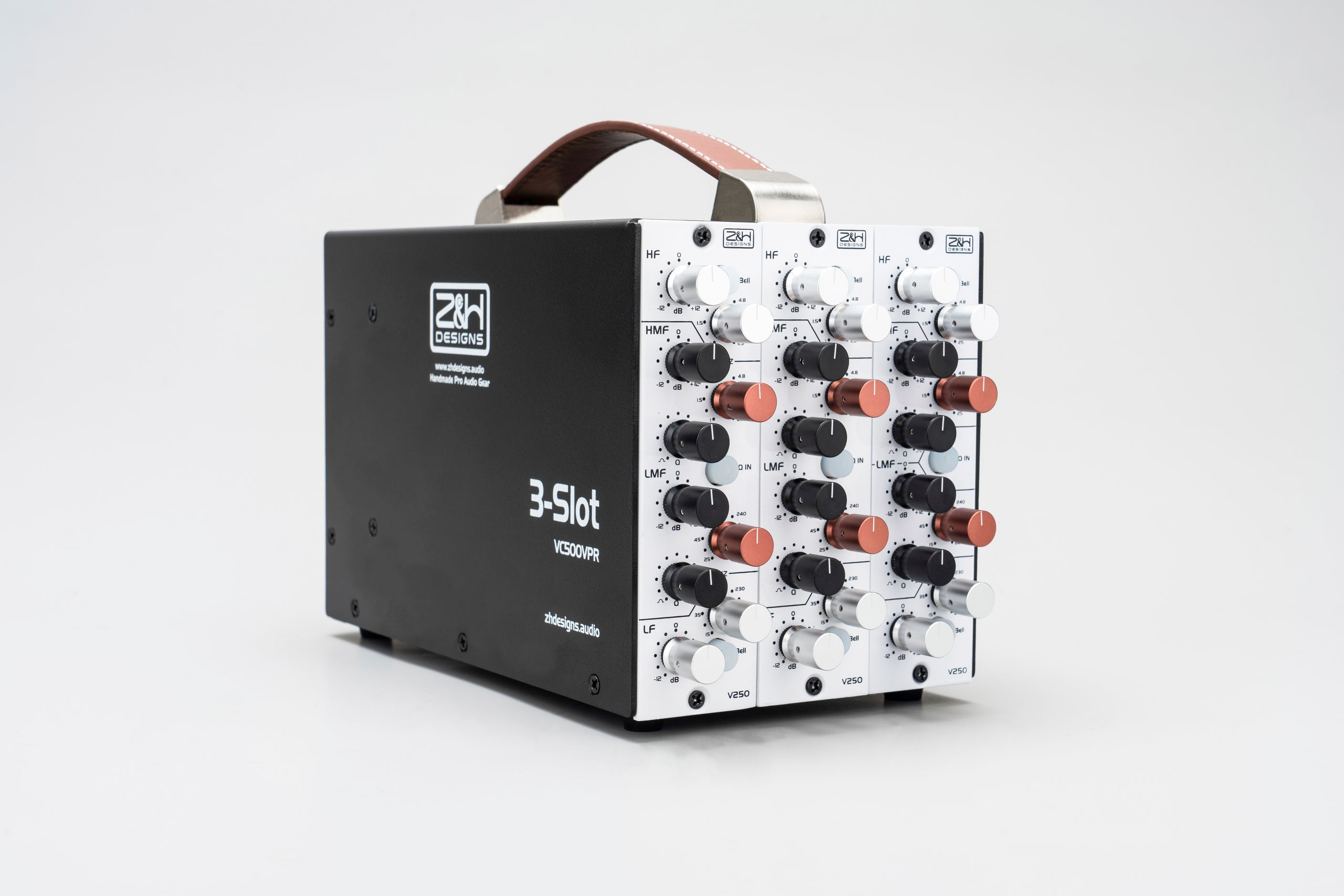
The 3-slot version makes the most sense when portability, a small channel strip, or a focused starter chain matters more than future sprawl.
Three slots means priorities. Pick modules that solve a specific job instead of trying to mimic a full studio rack.
Rack power still matters. Account for module current and phantom usage.
A small rack works best when every slot has a deliberate role.
Useful for a compact vocal, instrument, or mobile-recording setup.
A sensible place to begin when the goal is a small but deliberate module chain.
Best when three carefully chosen modules can cover the job without excess.
A practical fit where a large permanent rack is not the best answer.
Notes that make a small rack feel intentional instead of temporary.
With only three slots, every module choice should reflect an actual workflow need.
A compact rack rewards simple, reliable builds more than ambitious plans that fight the form factor.
Small racks still need module-current discipline even if the system looks straightforward.
A smart slot map can make a three-slot rack feel much more useful than its size suggests.
Specs
500 series power rack, 3-slot package
Built-in power supply for stability and ultra-low noise
Neutrik gold-plated XLR ports
8.3 in (21.0 cm) x 11.0 in (28.0 cm) x 6.3 in (16.0 cm)
5.5 lbs (2.5 kg)
Not necessarily. It is often better to build one purposeful chain than to fill the rack just because the slots are there.
Yes. Confirm the modules fit the rack's available power instead of assuming every combination is fine.
When the main goal is portability, a compact front-end chain, or a smaller studio footprint rather than broad expansion.
Usually a focused chain built around a real task - for example preamp, EQ, and compressor - rather than a random collection.
It speeds up troubleshooting and makes future rebuilds or travel setups much easier.
Downloads & Resources
Use the shared Setup Sheets library for now.
Open the shorter operating guide for a fast setup reference.
Use this guide when removing or reinstalling the VC500VPR 3-Slot carrying handle.
Use the support page when the issue moves beyond normal workflow and starts looking like routing, power, noise, current draw, phantom, or service.
A little context makes support faster and more accurate.
List the exact modules in each slot when reporting a problem.
Mention whether phantom-powered or unusually high-current modules were installed.
Say whether the rack was being used as a mobile chain, studio chain, or test setup.