

So here's something that doesn't get talked about enough. Every compressor you've ever used, whether it's a plugin or a piece of hardware worth more than your car, falls into one of two categories. Feedforward or feedback. And the difference between them? It's just one question: where does the compressor listen to the signal? Before the gain reduction stage, or after it?
That's called sidechain topology. And it's the real reason an 1176 feels nothing like an SSL bus compressor, even if you match the ratio and attack time exactly. Understanding this one concept honestly changed how we think about compression in the studio. You stop grabbing compressors by name and start picking them by behaviour.
The Two Architectures in 30 Seconds
OK, quick version.
Feedback: the detector sits after the gain reduction element. So it's listening to the output, the already-compressed signal. It hears what the compressor already did, and adjusts. Constantly. It's basically chasing its own tail, but in a useful way. Self-correcting loop.
Feedforward: detector sits before the gain reduction. It hears the raw input, does the math on how much to compress, and applies it. One shot. Done. No looking back, no adjusting. Open loop.

Feedforward (F.F.) takes the signal from the input, Feedback (F.B.) takes it from the output — one open loop, one closed loop. Source: MixAnalog


Feedforward: sidechain taps before the gain reduction (open loop). Feedback: sidechain taps after the gain reduction (closed-loop self-correction). Source: My New Microphone
One routing difference. That's all it is. But everything you hear, the ratio character, how fast it grabs, how it lets go, how the compressor "breathes" on a mix bus, it all comes from this.
What Does This Actually Sound Like?
Ratio Behaviour
Feedforward gives you exactly what you ask for. Set it to 4:1, you get 4:1. Every time, at every level. No surprises.
Feedback? Totally different story. The ratio moves around depending on how hard you're pushing into it. Quiet stuff barely gets compressed. But when things get loud, the ratio starts climbing on its own. Push it really hard and it'll approach limiting without you doing anything, no dedicated limiter circuit needed. It's sort of... reactive? We A/B'd the same VCA compressor in both modes on a vocal the other week, and honestly the feedback side just felt like it was paying attention to the performance. Feedforward was doing its job perfectly, but it felt more mechanical about it. Like, both sounded good, but for completely different reasons.
So if you're doing parallel compression or you need a brick-wall limiter, feedforward is the one. If you want something that rides the vocal or glues a mix bus together without you babysitting it, that's feedback doing its thing.
Attack and Release
With feedforward, the knobs tell the truth. 10ms attack = 10ms attack. Doesn't matter if you're pulling 2 dB or 20 dB of gain reduction. Consistent.
Feedback gets weird in a good way. When it's compressing hard, the attack actually gets slower, because the detector is reading a quieter signal (remember, it's post-compression). And the release does this cool two-stage thing where it starts fast and then gradually slows down as the compressor approaches unity gain. It's subtle on paper but you really hear it on sustained sources. Vocals especially. The compressor kind of breathes.
Drums and percussion, where you want the same attack on every hit? Feedforward. Anything where you want the compressor to adapt to the dynamics of the performance? Feedback.
Transients
This one's pretty simple. Feedforward sees the full uncompressed peak. Clamps it right away. Nothing sneaks past.
Feedback sees the peak after gain reduction already knocked it down a bit. So the initial transient punches through before the loop catches up. That's why the 1176 lets drum transients pop through even at the fastest attack setting. The feedback loop kind of cushions it.
For us, on vocals, we go feedback almost every time. There are exceptions but that's the default.
Why All Vintage Compressors Are Feedback (and What Changed)
This isn't some design philosophy thing. It's a practical constraint.
Feedforward needs the gain element to be really precise. You tell it "pull 6 dB" and it has to actually pull 6 dB. Not 4.7, not 8.2. Exactly 6. And vintage gain elements just... can't do that. Tubes drift. FETs vary between units. Optical cells have memory effects where the resistance depends on what happened ten seconds ago. Diode bridges are temperature-sensitive. None of them are accurate enough to work in an open loop. They all need the feedback correction.

Blackmer decilinear VCA — the first gain element precise enough to make feedforward compression practical. CC-SA 3.0 via Wikimedia Commons
Then in the early '70s David Blackmer came along and invented the decilinear VCA. First gain element that was actually precise enough for open-loop compression. The dbx 160 came out in 1976, first successful feedforward compressor, and it sounded like nothing else. Genuinely new.
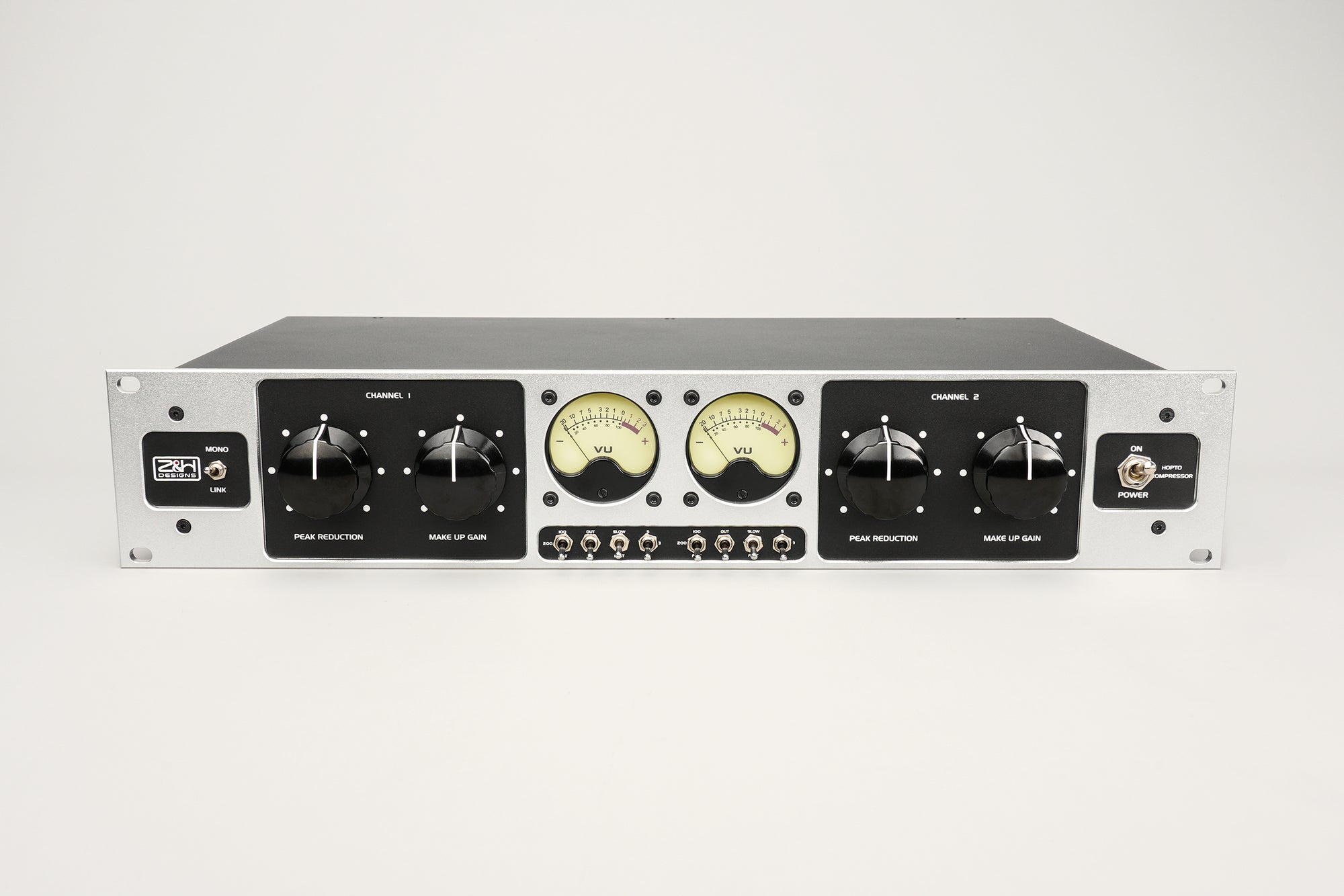
The THAT 2181 is the modern version of that same lineage. It's precise enough to run either topology, which is why our Z&H VCA Compressor has a switch on the front panel. Not a marketing feature. It's a real sidechain routing change. Flip it and the compressor behaves differently because the signal path is actually different.

Which Topology for What?
Source Material Guide
| Source | Topology | Why |
|---|---|---|
| Drums / Percussion | Feedforward | You want the same attack on every hit |
| Vocals | Feedback | Adaptive release, natural levelling |
| Bass | Try both | FF tightens it up, FB lets it groove |
| Mix Bus | Feedback | Programme-dependent ratio = "glue" |
| Parallel Compression | Feedforward | Needs to be predictable |
| Mastering | Feedback (usually) | Gentle, transparent |
Look, these aren't rules. We've used feedforward on vocals when the track needed that tighter, more controlled vibe. And feedback on a room mic can be amazing. The table is a starting point. After that, ears.
Which Compressor Uses What?
| Compressor | Gain Element | Topology |
|---|---|---|
| 1176 / 1178 | FET | Feedback |
| LA-2A / Hopto | Optical (CdS) | Feedback |
| Fairchild 670 / Model 670 | Tube (vari-mu) | Feedback |
| Neve 33609 | Diode bridge | Feedback |
| dbx 160 | VCA | Feedforward |
| SSL Bus Comp | VCA | Feedforward |
| Z&H VCA Compressor | VCA (THAT 2181) | Switchable |
See the pattern? Everything vintage is feedback. Everything that came after the Blackmer VCA opened up the feedforward option.
If You Can Switch, Try It
Got a VCA compressor with both modes? Here's what we do:
Set up something moderate. 3-4 dB of gain reduction, 4:1, medium attack and release. Switch back and forth between feedforward and feedback. Feedforward tends to sound tighter. More "produced." Feedback tends to sound smoother. Rounder. Like the compressor is working with you instead of for you.
We won't pretend we don't spend twenty minutes going back and forth before committing. It's part of the process.
The 1176 Thing
Here's what's cool about the 1176. It's got a 20-microsecond attack, which is absurdly fast. If that were a feedforward design, it would sound harsh. Clipped. Aggressive in a bad way.
But it's feedback. And FETs change resistance in nanoseconds, so the speed is real. But the detector is reading the already-compressed signal, right? So the control voltage is moderated by what the compressor already did. It self-corrects for overshoot. You can push an 1176 really hard and it doesn't get brittle.
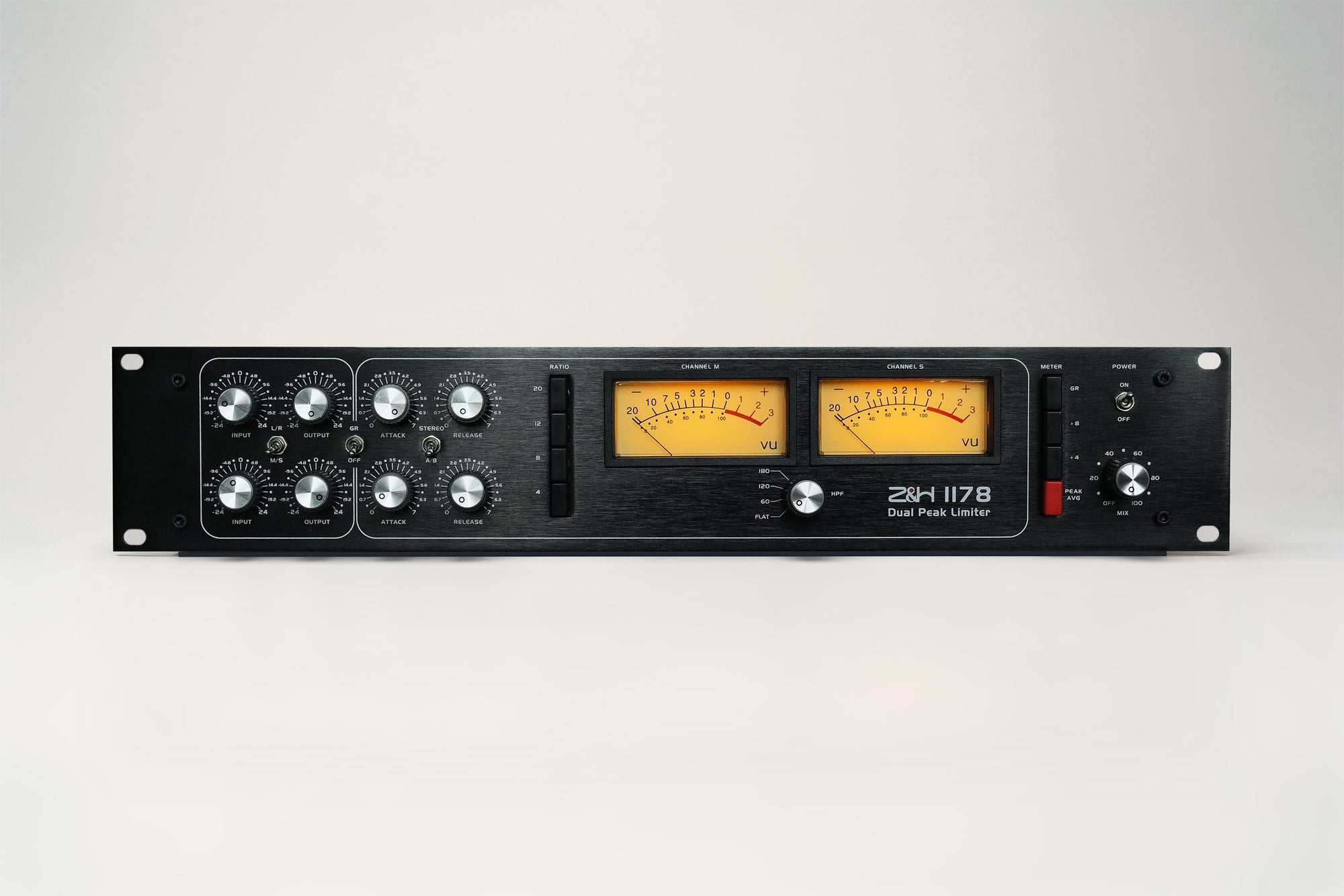
Our 1178 Stereo Peak Limiter uses the same topology. Same FET, same feedback loop. Slam it on a drum room mic and it sounds exciting, not destroyed. We do this constantly. It's sort of the go-to move in our room.

1176 Rev.A — FET feedback topology. 20μs attack that doesn't sound harsh because the feedback loop self-corrects for overshoot. CC-SA 2.0, John Tuggle via Wikimedia Commons
What Makes Optical Compressors So Different
So optical compressors (LA-2A, our Hopto) use a CdS photocell as the gain element. And the reason they feel different from everything else is that the photocell has actual physical memory. Like, the crystal structure changes.
When light hits the CdS, resistance drops. That's fast, milliseconds. But when the light goes away, the recovery happens in two phases. There's a quick initial bounce-back, and then this long slow tail where trapped carriers gradually release. And the thing that blew our minds when we first learned about this: the tail gets longer the harder you've been compressing. If you've been hitting it hard for ten seconds, the release is noticeably slower than if you just caught a quick transient. That's a property of the crystal itself. No circuit trick, no knob, no plugin can really replicate it.
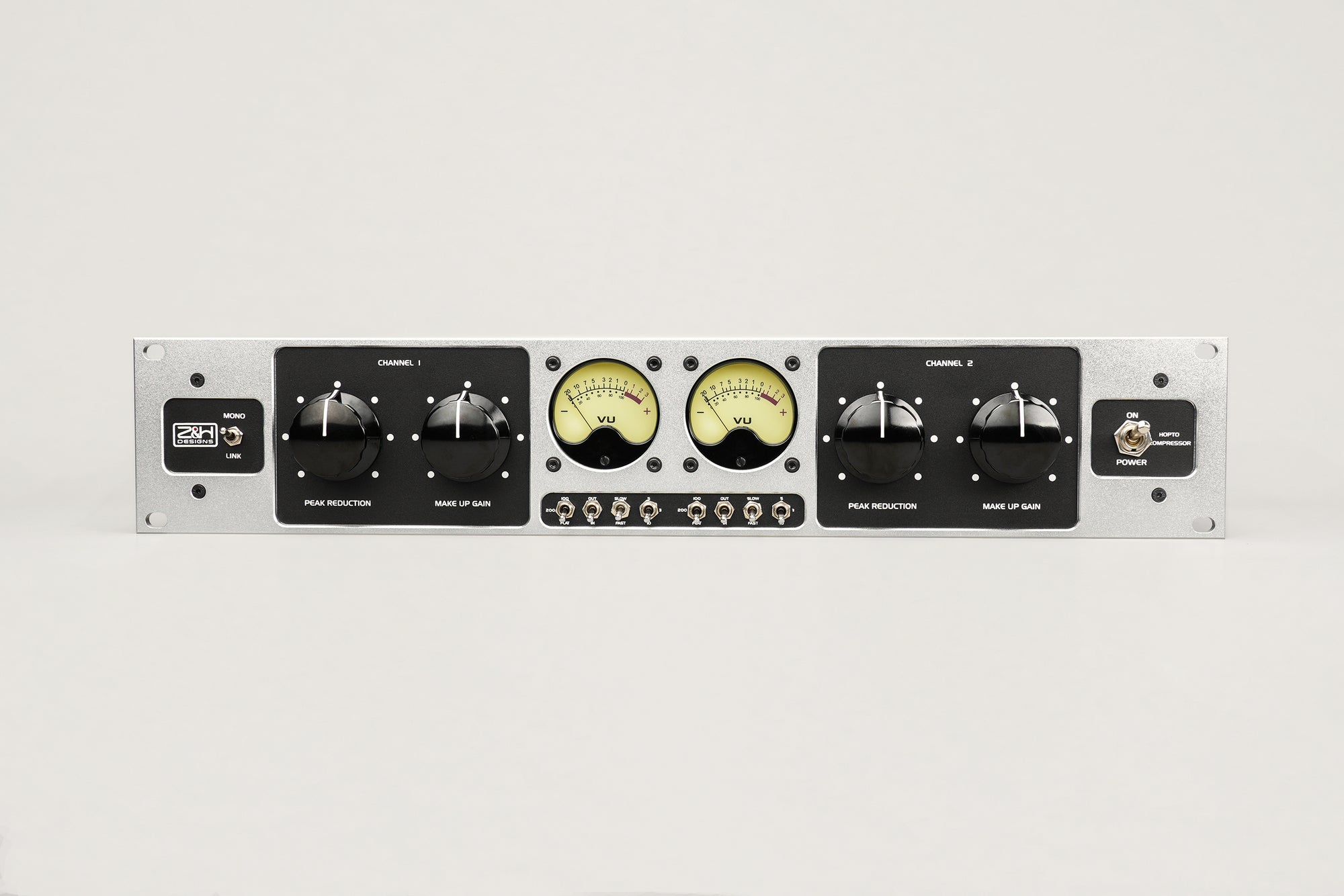
That's why the Hopto just holds a vocal at a consistent level without ever sounding like it's compressing. The VTL5C2 optocoupler is literally doing the work with physics. We know that sounds like a sales pitch, but it's genuinely just how CdS works. It's one of those things where the component IS the character.

Perkin Elmer VTL2C1 vactrol — the type of optocoupler that gives optical compressors their programme-dependent character. CC BY-SA 4.0 via Wikimedia Commons
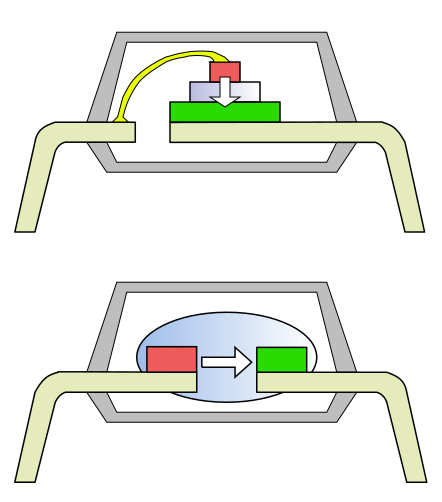
Two optoisolator topologies. Left: LED + photodiode (fast response). Right: LED + photoresistor/CdS (optical compressor type). CC BY-SA 3.0 via Wikimedia Commons
Quick Reference: Feedforward vs Feedback
| Feedforward | Feedback | |
|---|---|---|
| Listens to | Input (before GR) | Output (after GR) |
| Ratio | Fixed. What you set is what you get. | Adaptive. Increases with level. |
| Attack/Release | Determined by the knob and nothing else | Changes with compression depth |
| Transients | Caught precisely | Cushioned. Initial transient sneaks through. |
| Character | Tight, predictable | Smooth, reactive |
| Classic examples | dbx 160, SSL Bus Comp | 1176, LA-2A, Fairchild 670 |
| Best for | Drums, parallel comp, limiting | Vocals, mix bus, mastering |
Frequently Asked Questions
What is the difference between feedforward and feedback compression?
Short version: feedforward listens before the gain reduction, feedback listens after. That one difference changes the ratio behaviour, the timing, the transient response, basically everything. Two compressors with the same specs on paper can sound completely different because of this.
Is feedforward or feedback better for vocals?
For us, feedback, nine times out of ten. The adaptive ratio and release just work better on dynamic material like vocals. Optical feedback compressors are especially good here (LA-2A, Hopto) because of the photocell memory thing we talked about. But we've absolutely used feedforward on vocals too when the track called for it. Dense pop productions sometimes want that tighter control.
Why does the 1176 sound different from an SSL compressor?
Different topologies. 1176 is FET feedback, SSL bus comp is VCA feedforward. Even at identical settings the 1176 adapts to the signal while the SSL just does what you told it. Both great. Different tools.
Can I get both topologies in one compressor?
Yeah, if the gain element is precise enough. VCA compressors with modern Blackmer-lineage chips can do both. Our Z&H VCA Compressor has a front-panel switch that actually reroutes the sidechain. Same hardware, different behaviour.
Do plugins model compressor topology accurately?
Some of the better ones do a decent job with the feedback loop stuff, the adaptive ratio and timing. But the really specific things like CdS photocell memory or FET nonlinearity or tube soft-knee? Those are hard to get right. Hardware probably still has an edge here, though honestly the gap shrinks every year.

Z&H Designs builds compressors across four gain reduction technologies — 1178 Stereo Peak Limiter (FET feedback), Hopto Stereo Optical Compressor (optical feedback), Model 670 Vari-Mu (tube feedback), and Z&H VCA Compressor (VCA, switchable feedforward/feedback). Handmade in the UK with custom-wound transformers.

Studio outboard rack featuring LA-2A and other classic compressors. CC BY 4.0, PatchWerk Recording Studios via Wikimedia Commons
Sources
Sound On Sound, "Compressor Topology" — soundonsound.com
Wikipedia, "Blackmer Gain Cell" — en.wikipedia.org
THAT Corporation, "THAT 2181 Series Datasheet" — thatcorp.com (PDF)
Gyraf Audio, "1176 Clone / Rev. D Schematic" — gyraf.dk
VTL5C2 Optocoupler Datasheet — Farnell
Blackmer VCA gain cell diagram — Wikimedia Commons (Public domain)
Universal Audio 1176 Rev.A photo, John Tuggle — Wikimedia Commons (CC BY 2.0)
Perkin Elmer VTL2C1 vactrol photo — Wikimedia Commons (CC BY-SA 4.0)
Optoisolator topologies diagram — Wikimedia Commons (CC BY-SA 3.0)
Studio outboard rack, PatchWerk Recording Studios — Wikimedia Commons (CC BY 4.0)
Feedforward vs Feedback topology diagram — MixAnalog
Feedforward / Feedback compressor block diagrams — My New Microphone
Image Copyright Notice: All images used in this technical analysis are utilized under Fair Use provisions for educational, technical review, and analysis purposes. Original copyrights remain with their respective owners. No commercial use is intended. If copyright infringement occurs, please contact us for removal.






_angled_-_1093_Studios,_Athens,_Georgia_(2010-06-21_03.14.39_by_John_Tuggle).jpg)


.jpg)